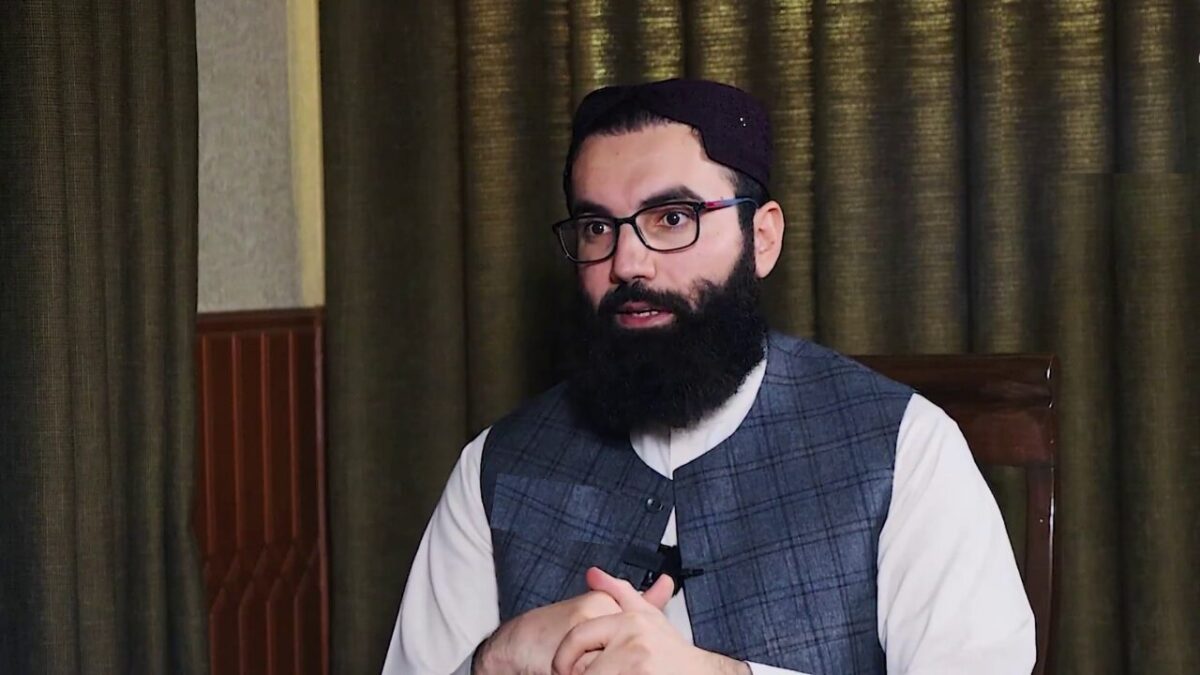
On the eve of the fourth anniversary of the Taliban’s return to power, senior Taliban member Anas Haqqani said they had intended to enter Kabul through a negotiated settlement to preserve the legitimacy of the government, but former President Ashraf Ghani’s flight from the country changed those plans.
Haqqani told Radio Hurriyat that one day before the fall of Nimroz province in August 2021, Akhundzada met with Taliban Interior Minister Sirajuddin Haqqani and Taliban Defense Minister Mohammad Yaqoob Mujahid to discuss the rapid collapse of Afghanistan’s provinces. According to Haqqani, Taliban leaders wanted to take Kabul through negotiations to preserve the government’s legitimacy and ensure continuity of administration.
That plan changed when President Ashraf Ghani fled the country on Aug. 15, creating a power vacuum. “Even then, there was a thought about Kabul — that our friends in Qatar were working to keep the government legitimate and avoid disruption — but events overtook it,” Haqqani said.
The Taliban’s entry into Kabul marked the end of the US-backed republic and the collapse of its army and institutions, a turning point that political analysts say triggered the country’s regression under Taliban rule.
Meanwhile, Haqqani said their leader, Hibatullah Akhundzada, ordered a last-minute religious review of the US-Taliban Doha Agreement in 2020, delaying the signing even as American negotiators were ready to proceed.
Haqqani, a former member of the Taliban’s negotiating team in Doha, told Radio Hurriyat that Akhundzada appointed a five-member committee — including Abdul Hakim Haqqani, head of the Taliban’s supreme court — to review the agreement for a third time to ensure it complied with Islamic law.
“The situation developed in such a way that Ashraf Ghani left and a power vacuum emerged. But even then, the idea about Kabul still existed — if you recall, Mujahid Sahib (Taliban spokesman) announced in the morning that our friends in Qatar were working hard so that the government’s legitimacy would remain, the administration would not face problems, and nothing else would go wrong,” he said.
Some political analysts say the fall of the government and the army, the breakdown of state institutions, and ultimately the country’s regression are the consequences of Afghanistan falling into Taliban hands.
Many citizens, especially women, say that with the Taliban’s arrival they have been deprived of all their rights to education, work and study, and that Afghanistan under Taliban rule has become like a prison for women.
“August 15 was the day schools fell silent, but our hearts were full of screams,” one student said who wished not to be named in this story. “They stole our future, but our dreams are still alive.”
Other citizens speak of worsening poverty during the Taliban’s four years in power and stress that unemployment has reached record levels.
UN figures also show that in the current year, more than half of Afghanistan’s population needs humanitarian assistance.