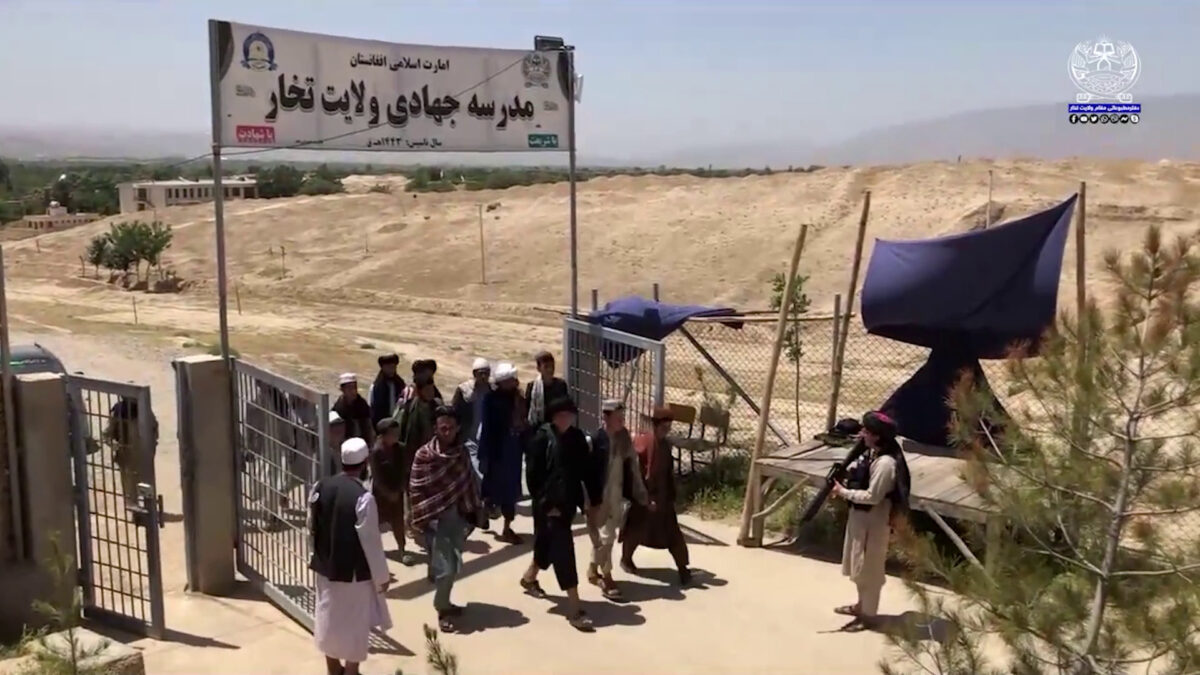
Taliban built or began construction on seven religious schools across the country in the month of Saratan (June 22–July 22), a sharp rise from just one school in the preceding month, according to figures released by the Taliban-run Ministry of Education.
The surge in religious school construction—at a reported cost of nearly 35 million Afghanis (about $500,000)—comes as secondary and higher education for girls remains banned across the country. The ministry did not provide details on the funding sources, though construction was reportedly overseen directly by Taliban authorities.
Among the schools inaugurated or initiated in Saratan are Taaleem al-Quran for Girls in Parwan, Hazrat Usman Zulnurain in Herat, Tayeba School for Girls in Ghazni, Nakhl and Hazrat Abbas Darul Uloom in Paktika, and the Central Darul Uloom of Gosfandi District in Sar-e-Pul. An additional school, not named in the ministry’s report, was also started last month.
The Taliban-run Bakhtar News Agency also reported the launch of a private religious school called Misbah al-Uloom in Balkh Province. The school is being built on one acre of land and is expected to cost 10 million Afghanis. Photos circulated by the agency showed Taliban security forces providing protection at the site.
The uptick in religious school construction has drawn concern from analysts who warn that the Taliban are using these institutions to promote extremist ideology and train a new generation aligned with their vision.
“The Taliban’s goal is the export of jihadist ideology and regional terrorism,” said Bismillah Taban, a Kabul-based security analyst. “These schools are being built to raise radical groups that are in ideological sync with the Taliban.”
According to a review of publicly available figures from the ministry’s website, 20 religious schools have either been completed or broken ground in the first four months of the current Afghan calendar year, including a Jihadi Madrasa in the Kuran wa Munjan district of Badakhshan.
The rise in Taliban-backed religious education stands in stark contrast to the continued ban on girls’ education, now in its fourth year. More than 1,400 days have passed since girls last attended high school, and female students remain barred from university classrooms.
“We waited more than three years just to sit for the university entrance exam,” said one 12th-grade graduate. “The Taliban never allowed it. Being cut off from education has made our lives dark.”
Human rights groups have criticized the Taliban’s focus on religious infrastructure while continuing to restrict access to education for half the population. International appeals to reopen schools for girls have so far gone unanswered.