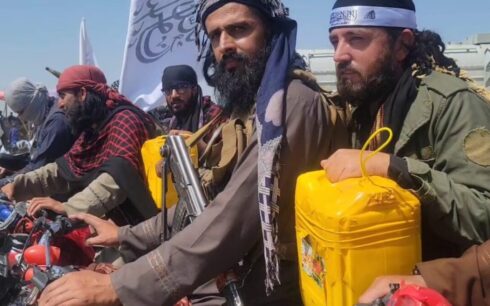
The UN secretary-general has reported to the Security Council that 21 cases of conflict-related sexual violence against women and girls were documented in Afghanistan in 2025, with the abuses attributed to Taliban officials, including members of their security forces.
According to the report, compiled by the UN Assistance Mission in Afghanistan (UNAMA), the documented cases involved 15 women and six girls and included rape, gang rape, forced marriage and forced nudity.
“UNAMA verified cases of rape, gang rape, forced marriage and forced nudity affecting 15 women and six girls, attributed to de facto officials, including de facto security personnel,” the report says.
The findings are included in the secretary-general’s annual report on conflict-related sexual violence, which describes Afghanistan as facing “acute humanitarian needs and impunity” amid continuing restrictions on women and girls.
The report says Taliban were implicated not only in acts of sexual violence but also in the continuation of forced marriages, despite a decree issued by the Taliban in 2021 formally prohibiting the practice.
The secretary-general also cited findings by the UN special rapporteur on human rights in Afghanistan, who reported that women challenging or protesting Taliban policies have been subjected to arbitrary detention. According to the report, women in detention have faced torture and ill-treatment, including sexual violence.
The report links the documented abuses to a broader deterioration in the protection of women’s rights since the Taliban returned to power in August 2021.
Four years after the dismantling of legal frameworks and specialized courts dealing with violence against women, the report says uncertainty remains over women’s access to justice. Cases involving gender-based violence are now largely handled by male officials, raising concerns about accountability and protection for survivors.
The UN also warned that support systems for victims have weakened substantially.
While humanitarian organizations continued to provide legal aid, psychosocial support and case management services, the report says funding shortages and restrictions on female aid workers sharply reduced the availability of assistance. Taliban restrictions on women’s employment and movement have further limited the ability of humanitarian organizations to reach vulnerable populations.
As of July 2025, more than 400 health facilities had closed across Afghanistan, according to the report. Hundreds of UN-supported service points that provided assistance to survivors of gender-based violence were also forced to shut down because of funding shortfalls.
The report further notes that Taliban continued to bar Afghan women, including female United Nations staff members, from accessing UN offices, creating additional obstacles to the delivery of humanitarian assistance and protection services.
Victims of conflict-related abuses in Afghanistan have repeatedly called for recognition of the harms they suffered, compensation, guarantees against future violations and criminal accountability for perpetrators, the report says.
In a section addressing justice and accountability, the report highlights the establishment in October 2025 of an Independent Investigative Mechanism for Afghanistan by the UN Human Rights Council. The body was created to collect, preserve and analyze evidence of international crimes and serious violations of international law, including crimes committed against women and girls.
The report also points to the broader human cost of sexual violence. In a review of global trends, it notes that cases of suicide among survivors of conflict-related sexual violence were documented in both Afghanistan and Myanmar.
In its recommendations, the secretary-general called on Taliban authorities to “immediately cease all acts of sexual violence,” reverse policies that restrict the rights and freedoms of women and girls, comply with Afghanistan’s international obligations and Security Council resolutions, and lift restrictions preventing Afghan women from working for the United Nations and nongovernmental organizations.
The report covers the period from January through December 2025 and forms part of the United Nations’ annual assessment of conflict-related sexual violence worldwide. It warns that shrinking humanitarian funding, attacks on aid workers and growing restrictions on women’s rights are increasing the vulnerability of survivors in conflict-affected countries, including Afghanistan.