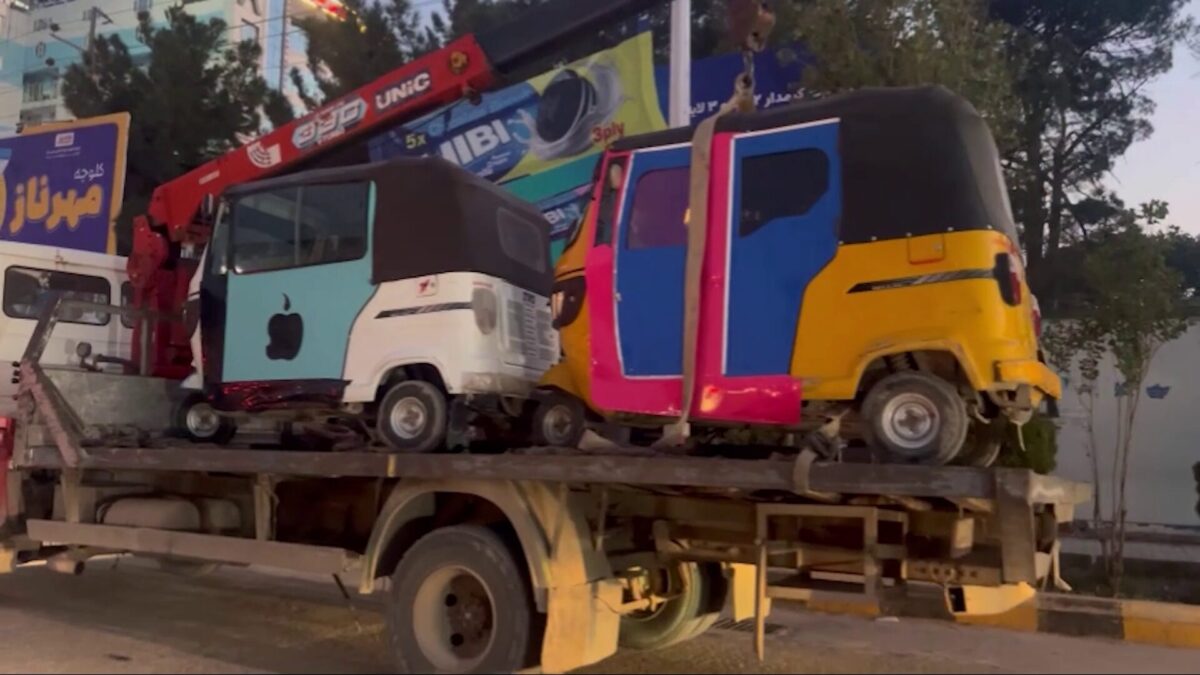
A Taliban ban on rickshaws in the city of Herat has left thousands of drivers without work, as enforcement intensifies four months after the restrictions were introduced, according to local sources and residents.
Traffic authorities have been stopping and impounding dozens of the vehicles each day across the city, residents said.
Taliban initially barred the vehicles from entering central districts, a move that drew criticism from drivers when it was announced.
Local sources say enforcement has since escalated, with continued stops and fines imposed on drivers. Preliminary estimates suggest that as many as 50,000 people may have lost their livelihoods as a result of the restrictions, though that figure could not be independently verified.
Drivers say many had invested their savings in purchasing the vehicles and now have few alternatives.
“I have no money left to start another job,” said Zmarai, a driver in Herat. “When we had these vehicles, we could earn enough each day to feed our families. Now we don’t know what to do.”
Others said the restrictions have sharply reduced the resale value of the vehicles. Some that once sold for more than 160,000 afghanis ($2,500) are now worth between 50,000 ($790) and 80,000 afghanis ($1,200), according to residents.
“I bought mine on installments and later had to sell it at a loss,” said Mirwais, a Herat resident. “After they stopped our work, I couldn’t even pay my rent and had to leave my home.”
Local sources also said impounded vehicles are sometimes returned after payments described as fees or rental charges, though drivers say the process lacks transparency.
Drivers have called on Taliban to reconsider the restrictions, saying the ban has deprived them of their primary source of income in a city with limited employment opportunities.