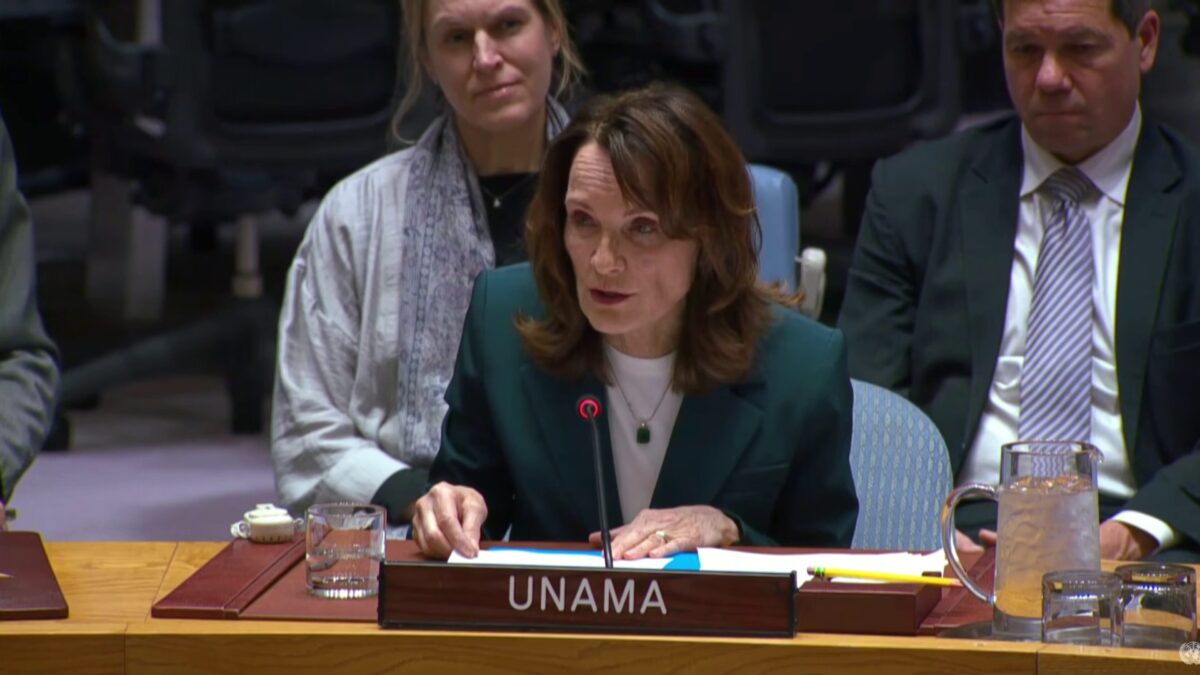
Georgette Gagnon, the acting head of the UN mission in Afghanistan, warned that escalating border clashes between Taliban and Pakistan are disrupting humanitarian aid and forcing civilians from their homes.
Gagnon said Pakistani airstrikes and border fighting have interfered with the delivery of aid and contributed to displacement inside Afghanistan.
“Airstrikes and border clashes have disrupted humanitarian assistance and caused both primary and secondary displacement,” Gagnon said. “Our humanitarian partners are also reporting delays and disruptions in the transport of essential goods.”
Her remarks came as tensions between Pakistan and the Taliban have intensified along the Afghanistan-Pakistan border in the past 16 days, raising concerns about civilian casualties and worsening humanitarian conditions.
UN spokesman Stephane Dujarric also warned that the escalation could deepen civilian suffering and damage already fragile infrastructure.
“The recent escalation could further deepen the suffering of civilians and cause additional damage to civilian infrastructure that is already fragile,” Dujarric said.
He added that according to the UN refugee agency, more than 4.1 million people have been displaced across Afghanistan, Iran, Lebanon and Pakistan since the latest regional tensions began.
Gagnon also warned that wider instability in the region is already affecting Afghanistan’s economy and humanitarian situation.
She said disruptions to traditional trade routes and regional supply chains are driving up the prices of basic commodities in Afghanistan, placing additional strain on the country’s fragile economy.
Humanitarian agencies are also anticipating an increase in Afghan returnees from neighboring countries, which could further pressure communities already hosting millions of people who have returned since 2023.
“These pressures — combined with limited humanitarian funding and growing restrictions on access — are increasing vulnerabilities across the country,” Gagnon said.
She also raised concerns about Taliban restrictions on women and the continued ban on female UN staff working in Afghanistan, warning that such policies undermine prospects for Afghanistan’s reintegration into the international community and hinder aid delivery, particularly for women and girls.
Despite the challenges, Gagnon said the United Nations remains committed to supporting an Afghanistan that is at peace with itself and its neighbors and reintegrated into the international system.
She urged both Pakistan and the Taliban to accept mediation efforts and avoid further escalation of tensions that could deepen the regional crisis.