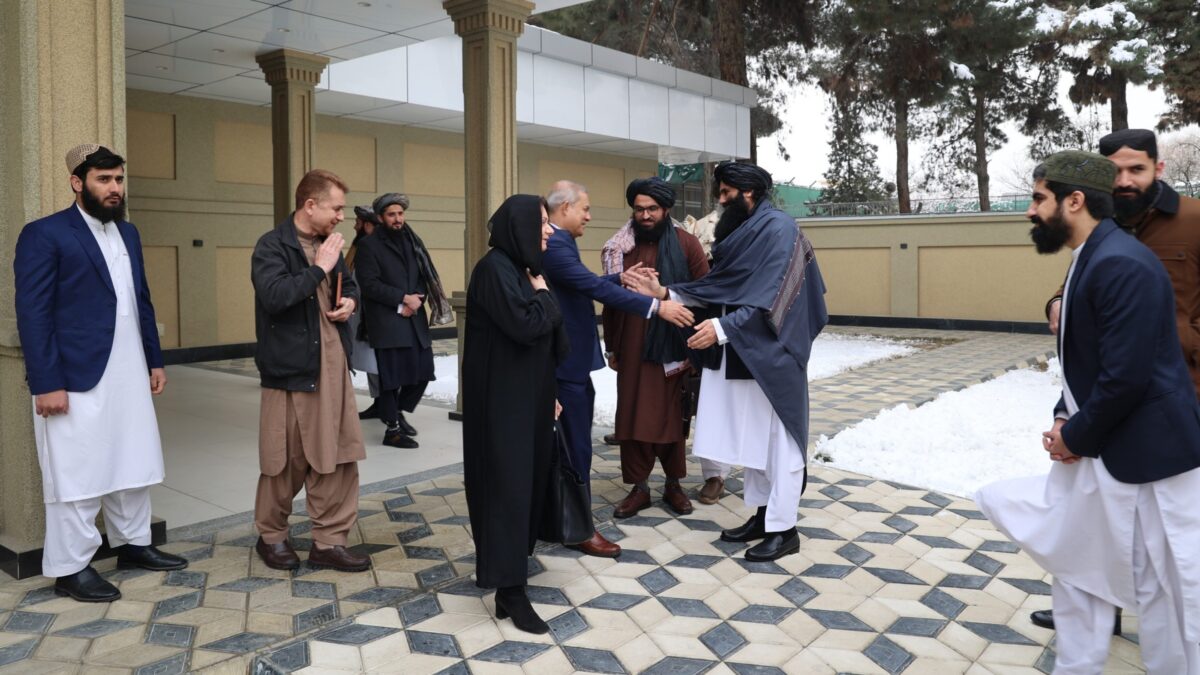
United Nations Under-Secretary-General for Political and Peacebuilding Affairs Rosemary DiCarlo urged the Taliban to immediately lift restrictions on women’s work, particularly those affecting female UN staff, as she wrapped up a two-day visit to Kabul, the United Nations said on Sunday.
In a statement, the UN said DiCarlo raised deep concern during meetings with Taliban officials over bans on women working for the United Nations, as well as broader restrictions on women’s access to education, employment and public life.
The continuation of such measures violates women’s fundamental rights and severely undermines the UN’s ability to deliver effective humanitarian assistance in Afghanistan, the statement said.
During her visit, DiCarlo met senior Taliban officials, members of the diplomatic community in Kabul, women, civil society representatives and female UN staff. She also called on the Taliban to engage fully in the UN-led Doha process and to honour international commitments necessary for Afghanistan’s reintegration into the global community.
The UN said DiCarlo stressed the importance of unimpeded cross-border transit for humanitarian aid and urged Taliban cooperation to ensure assistance reaches those in need. She also expressed solidarity with female UN employees and highlighted their vital role in supporting Afghan communities.
Taliban officials said DiCarlo also met their foreign minister Amir Khan Muttaqi and their interior minister Sirajuddin Haqqani, and discussed international engagement and the Doha talks. According to Taliban statements, DiCarlo said the next meetings of Doha working groups would be held in Kabul, though the United Nations has not confirmed this.
DiCarlo also met Iran’s chargé d’affaires in Kabul, according to Iran’s diplomatic mission, which said discussions focused on the work of the UN Assistance Mission in Afghanistan (UNAMA).
The visit comes as the United Nations continues efforts to manage Afghanistan’s overlapping humanitarian, economic and human rights crises. The international community has repeatedly said progress in engagement with Afghanistan depends on improvements in human rights, particularly the rights of women and girls — a position the Taliban reject, calling the issue an internal matter.