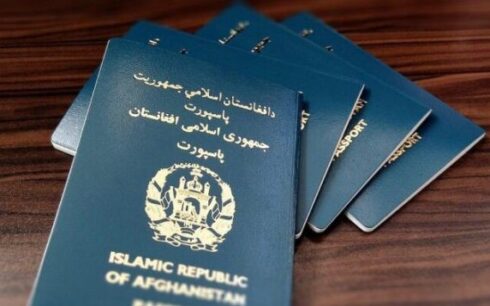
The White House has said that President Trump has expanded a travel ban to fully bar entry into the United States by nationals of 12 countries, including Afghanistan, citing national security and public safety concerns.
In a proclamation signed by Trump, the White House said the affected countries suffer from “demonstrated, persistent, and severe deficiencies” in screening, vetting and information-sharing systems, which it said pose risks to US national security.
Alongside Afghanistan, the countries subject to full travel restrictions are Myanmar, Chad, the Republic of the Congo, Equatorial Guinea, Eritrea, Haiti, Iran, Libya, Somalia, Sudan and Yemen, the statement said.
The proclamation also adds full entry restrictions on nationals of five additional countries — Burkina Faso, Mali, Niger, South Sudan and Syria — based on what the White House described as a recent security assessment.
In addition, the administration imposed full entry restrictions on individuals holding travel documents issued by the Palestinian Authority, and upgraded Laos and Sierra Leone from partial to full restrictions, the White House said.
Partial restrictions will continue to apply to nationals of several other countries, including Burundi, Cuba, Togo and Venezuela, it added, while new partial limits were introduced on a number of African and Caribbean states.
The White House said the new measures also narrow broad family-based immigrant visa exemptions, which it said carry fraud risks, while retaining case-by-case waivers.
Advocacy group AfghanEvac said the order also eliminates visa exemptions for Afghans approved under the US Special Immigrant Visa (SIV) programme, which applies to Afghans who worked directly with US forces and diplomatic missions.
AfghanEvac said SIV applicants undergo extensive security vetting under US law and warned the decision would further separate families, leave refugees stranded and harm US allies, including Afghans who served alongside American troops and diplomats.