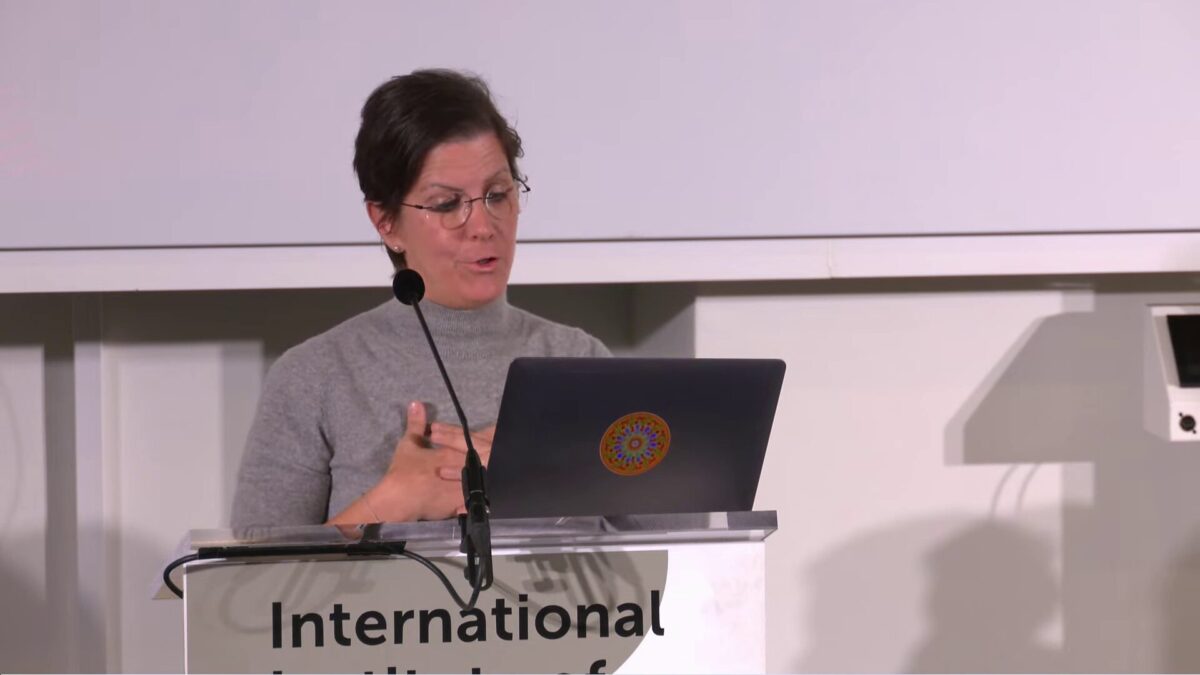
UN Special Rapporteur on violence against women and girls Reem Alsalem said on Thursday that a public tribunal’s judgment on rights abuses in Afghanistan marks a “crucial step” in recognising the systematic and premeditated erasure of women’s and girls’ rights under Taliban rule.
Addressing the People’s Tribunal on Afghanistan in The Hague, Alsalem said the ruling clearly outlined the harms suffered by Afghan women and detailed how Taliban policies violate binding international legal obligations. She said the violations formed part of a “systemic and systematic policy aimed at the erasure of women and girls from life in Afghanistan.”
Alsalem said the judgment underscored that crimes such as torture, genocide and slavery violate jus cogens norms — international rules that cannot be set aside — and that states party to human rights treaties have a duty to act. “They cannot hide behind excuses,” she said. “Whether it’s their domestic laws, their own cultures, or their concepts of sovereignty.”
While acknowledging ongoing discussions about codifying “gender apartheid,” Alsalem said she had reservations about the term. She welcomed the tribunal’s reliance on already recognised concepts such as gender persecution as a crime against humanity.
She suggested that the situation in Afghanistan may be more accurately captured by the concept of “femi-genocide,” arguing that Afghan women and girls constitute a defined group under the Genocide Convention and are being intentionally subjected to conditions harmful to their mental and physical integrity because they are female.
Alsalem said Taliban restrictions had created conditions “calculated to bring about their physical destruction and harm,” citing severe psychological trauma, suicides and the deliberate imposition of life-limiting constraints.
Based on her experience living in Afghanistan, she said the Taliban’s treatment of women did not reflect broader societal values and that Afghan women could not “opt out” of discrimination based on sex.
Alsalem urged states to take the tribunal’s recommendations seriously and to strengthen efforts to hold perpetrators accountable under existing international law. She said the ruling amplified the voices of Afghan women and clarified that responsibility for abuses lies with the Taliban, not with victims.