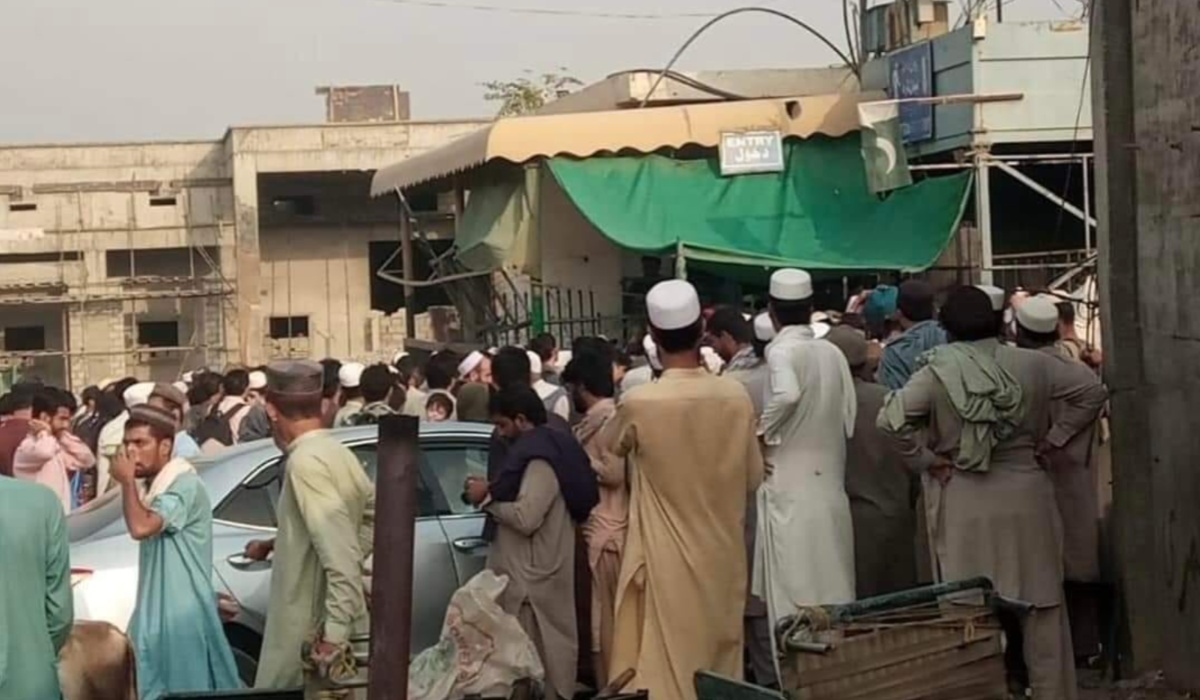
Hundreds of Afghans remain stranded at the Torkham border crossing between Afghanistan and Pakistan, as diplomatic tensions and mass deportations have effectively sealed one of the region’s most vital transit routes.
The Torkham crossing has remained closed for trade and travellers for the past three weeks. It was reopened only for deported migrants on Saturday, Nov. 1.
Some of those stuck at the border, including travelers, traders and returnees, say they are enduring worsening conditions and are urging both governments to immediately reopen the crossings. While Pakistan briefly reopened the Torkham crossing on Saturday, it did so only to facilitate the forced expulsion of undocumented Afghan migrants.
Many of those deported describe being mistreated by Pakistani authorities and say they were sent back with no possessions. “The Pakistani government treated us harshly,” said Daud, a deported migrant who arrived with his family. “They imprisoned us. We came with only the clothes on our backs. All of our belongings were left behind.”
More than three weeks have passed since major border points between the two countries were fully operational. Hundreds of trucks carrying commercial goods remain stranded on both sides, halting trade and raising concerns about economic and humanitarian fallout.
Speaking to Amu, several deportees appealed for urgent assistance, including access to shelter, work and education for their children. “We need jobs. I have eight children,” one returnee said. “There must be opportunities for them to study.”
Despite reports that negotiations are underway between Afghan and Pakistani officials, the crossings — including Torkham, Spin Boldak, Angur Ada, Ghulam Khan and Dand-e-Patan — remain closed to regular traffic. The closures have disrupted regional trade, caused financial losses and stranded passengers who lack the means to wait indefinitely.
“We’ve been here nearly a month,” said Mohammad Asif, a traveler waiting at Torkham. “We have valid visas and passports, but nothing is moving. Fruit trucks are rotting, people have run out of money, and we don’t know when the gates will open. Everything is at a standstill.”
Pakistan announced a sweeping crackdown on undocumented foreigners earlier this fall, giving more than one million Afghans until Nov. 1 to leave the country or face detention and deportation. The decision has triggered a wave of returns, many under duress, straining already limited resources inside Afghanistan.
Observers say the border closures reflect not only logistical pressures from the deportation drive but also deteriorating ties between Islamabad and the Taliban authorities in Kabul. A full reopening, analysts suggest, may depend on progress in resolving political and security disputes between the two sides.