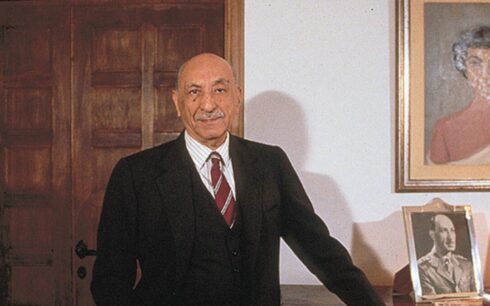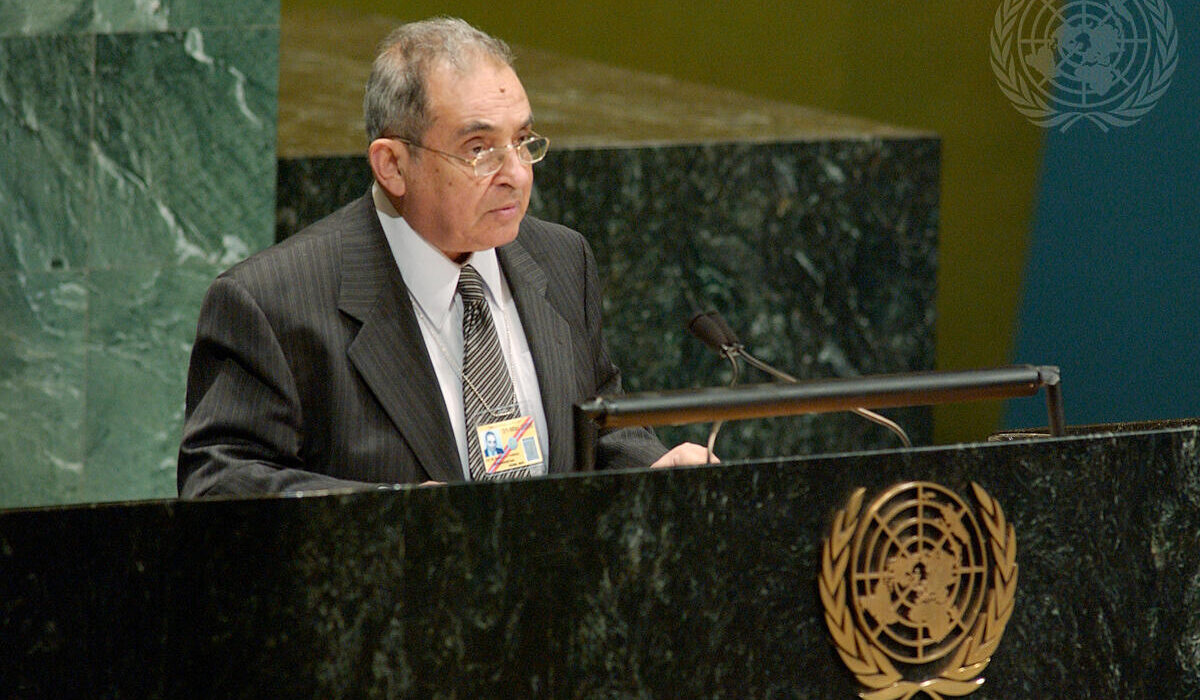
Abdul Ghafoor Ravan Farhadi, an Afghan diplomat, scholar and one of the country’s foremost authorities on Persian language, literature and Islamic mysticism, died on Sunday in San Francisco. He was 96.
His family confirmed his death. No cause of death was immediately disclosed.
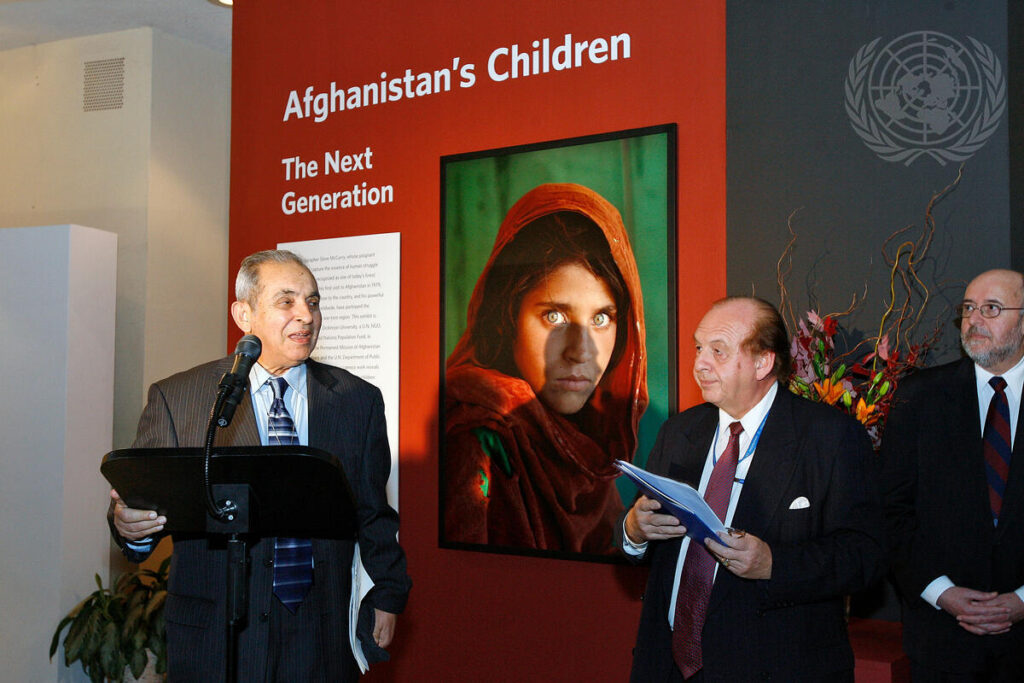
Ravan Farhadi devoted more than seven decades to diplomacy, scholarship and public service, earning recognition as one of Afghanistan’s leading intellectuals. He served as Afghanistan’s permanent representative to the United Nations from 1993 to 2006, a period spanning the country’s civil war, Taliban rule and the establishment of a new internationally recognized government.
Born in Kabul on Aug. 23, 1929, into a family of educators, Ravan Farhadi was introduced to Persian literature and Islamic studies by his father, Abdul Baqi, a teacher at Esteqlal High School. His aptitude for languages emerged early; by age 16, his French translations were being published in the newspaper Anis.
After graduating from Esteqlal High School, he continued his studies in France, attending the Paris Institute of Political Studies (Sciences Po) and the Sorbonne. He studied political science, international relations, linguistics and literature and earned a doctorate at age 25 with a dissertation on Afghanistan’s Persian, or Dari.
In addition to Persian and Pashto, Ravan Farhadi spoke French, English, Arabic, Spanish, Turkish and Urdu, and had knowledge of Bengali.
Returning to Afghanistan, he joined the Foreign Ministry while teaching at Kabul University’s Faculty of Law. His diplomatic career included postings as first secretary at the Afghan Embassy in Karachi, director of the United Nations and cultural affairs departments at the Foreign Ministry, counselor at Afghanistan’s embassy in Washington, and later the ministry’s youngest director general for political affairs.
In 1972, he was appointed Afghanistan’s ambassador to France. His tenure ended months later after the 1973 coup that overthrew King Mohammad Zahir Shah and brought Mohammed Daoud Khan to power.
Following the 1978 communist coup, Ravan Farhadi was arrested by the new government and spent nearly 20 months in Pul-e-Charkhi prison. After his release, he left Afghanistan and settled first in France and later in the United States.
During his years in exile, he taught Persian literature, history and Islamic civilization at universities and academic institutions, including the University of Paris III, the University of California, Berkeley, and the International Institute of Islamic Thought and Civilization in Malaysia. He also remained active in academic and international forums advocating for Afghanistan.
In 1993, at the request of President Burhanuddin Rabbani, Ravan Farhadi was appointed Afghanistan’s permanent representative to the United Nations. He remained in the role until 2006, representing Afghanistan during one of the country’s most turbulent periods.
Among the achievements most closely associated with his diplomatic career was preserving Afghanistan’s seat at the United Nations during the Taliban’s first period of rule. Although the Taliban sought international recognition and control of the seat, the United Nations continued to recognize the government represented by Ravan Farhadi. Reflecting on that period years later, he said the Taliban “were never able to represent Afghanistan at the United Nations, even for five minutes.”
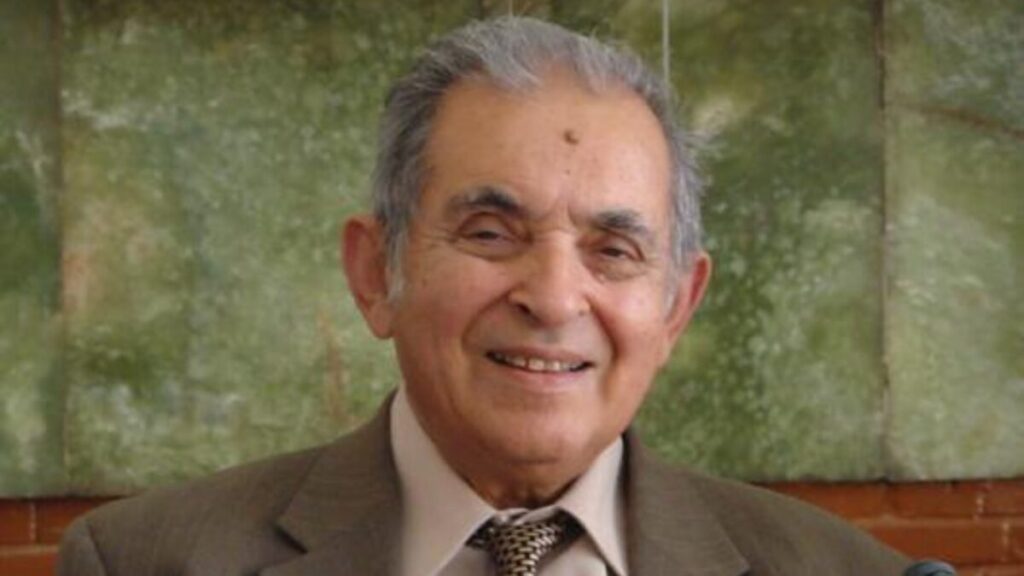
Alongside diplomacy, Ravan Farhadi built a distinguished scholarly career, publishing extensively on Afghanistan’s history, Persian language and literature, and Islamic mysticism. His research explored the works of figures including Khwaja Abdullah Ansari, Jalal al-Din Rumi, Sana’i, Amir Khusraw, Avicenna and Mansur al-Hallaj. He also translated works by Louis Massignon, Rabindranath Tagore and Albert Camus into Persian.
Among his best-known publications were Essays of Mahmoud Tarzi, The Legislative Movement at the Dawn of Afghanistan’s Independence and Using Ferdowsi’s Shahnama in Persian Lexical Research.
Ravan Farhadi remained active in research and translation well into his later years. One of his final scholarly projects focused on the Arabic ghazals of Jalal al-Din Rumi.
He was also recognized for his translation and research on Manazil al-Sa’irin by Khwaja Abdullah Ansari. After receiving an award from the Iranian presidency for the work, he donated the prize money to an orphanage in Kabul to support children without families.
Ravan Farhadi spent his final years in California. He is survived by three children.