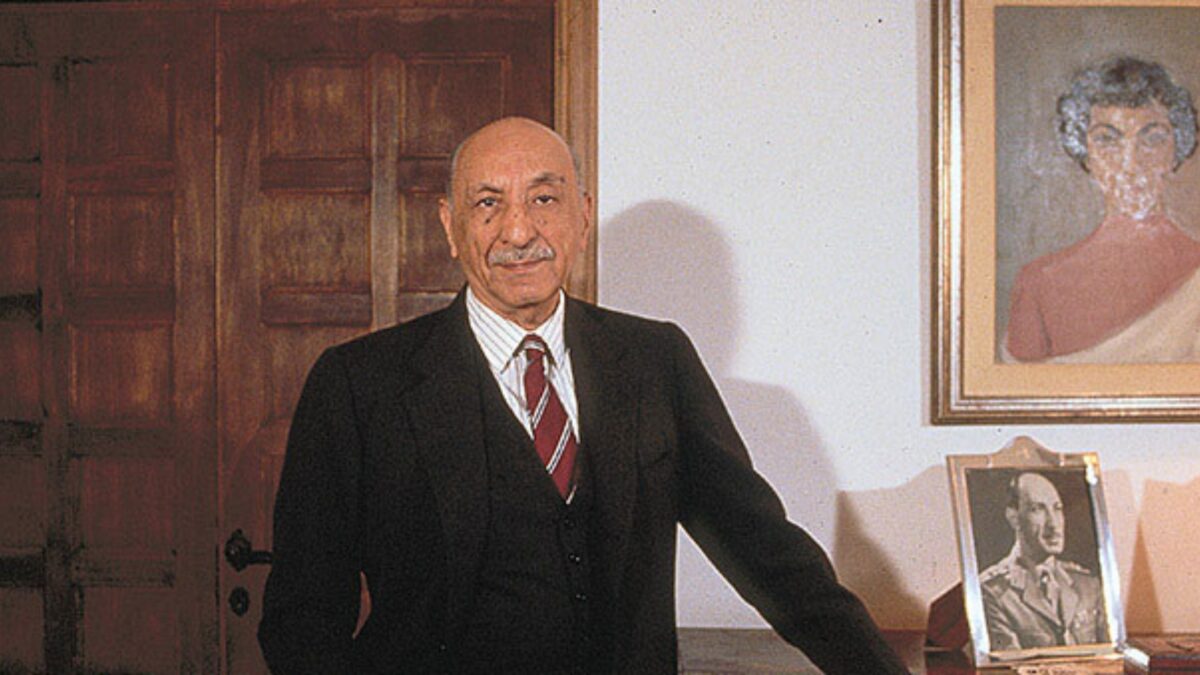
Nineteen years after the death of Mohammad Zahir Shah, Afghanistan’s last king, his nearly four-decade reign remains one of the country’s most debated chapters, remembered by supporters as a period of stability and gradual reform and criticized by others as an era marked by poverty, slow modernization and missed opportunities.
Zahir Shah died on Aug. 1, 2007, at the age of 92 and was buried on Maranjan Hill in Kabul. He ruled Afghanistan from 1933 until 1973, making him the country’s longest-serving monarch.
Zahir Shah ascended the throne at age 19 after the assassination of his father, King Mohammad Nader Shah. During the early years of his reign, much of the country’s affairs were managed by his uncles, but he later consolidated his authority and presided over a period that coincided with World War II and the Cold War.
Afghanistan maintained neutrality throughout those global conflicts, balancing relations with the United States and the former Soviet Union while avoiding direct involvement in either camp. Many Afghans regard those decades as among the most peaceful in the country’s modern history.
His reign also saw gradual efforts to modernize the country. His government pursued economic reforms, expanded access to education, including for women, and adopted the 1964 Constitution, which transformed Afghanistan into a constitutional monarchy and introduced limited political pluralism, parliamentary elections and greater press freedom.
Zahir Shah is perhaps best remembered for Afghanistan’s “Decade of Democracy” (1963–73), when a new constitution transformed the country into a constitutional monarchy, expanded press freedoms and allowed parliamentary elections and limited political pluralism.
The monarchy came to an end in July 1973 while Zahir Shah was in Italy for medical treatment. His cousin and former prime minister, Mohammad Daoud Khan, seized power in a bloodless coup, abolished the monarchy and declared Afghanistan a republic.
Zahir Shah spent nearly three decades in exile in Rome before returning to Kabul in 2002 following the collapse of the Taliban’s first government.
That year, delegates to the Emergency Loya Jirga awarded him the honorary title “Father of the Nation.” Although some supporters had hoped he would return to the throne, he backed the establishment of the new political order after the US-led intervention.
In one of his public remarks after returning to Afghanistan, Zahir Shah said he hoped relations with the United States would remain friendly after foreign forces eventually left the country.
“When today’s necessities come to an end, it is natural that one day they will leave our country, and we will look upon the Americans as friends,” he said in 2002.
Assessments of Zahir Shah’s legacy remain sharply divided.
Critics say Afghanistan remained poor and underdeveloped during his four decades in power and argue that the pace of political and economic reform was too slow. Some historians have also faulted the monarchy for failing to build institutions capable of withstanding the political turmoil that followed.
Supporters, however, view his reign as a rare period of political stability, national unity and relative peace.
“He adhered closely to the rule of law, particularly during the final decade of his reign,” Nasrullah Stanikzai, a former lecturer at Kabul University, said. “He introduced important measures to expand civil and democratic freedoms, achievements that have rarely been matched in Afghanistan’s subsequent history.”
For many Afghans, the years under Zahir Shah stand in stark contrast to the decades that followed. Since the 1973 coup, Afghanistan has experienced successive coups, foreign invasions, civil war, Taliban rule, the US-backed republic and the Taliban’s return to power in 2021, leaving the country in a state of almost continuous conflict and political upheaval for more than half a century.