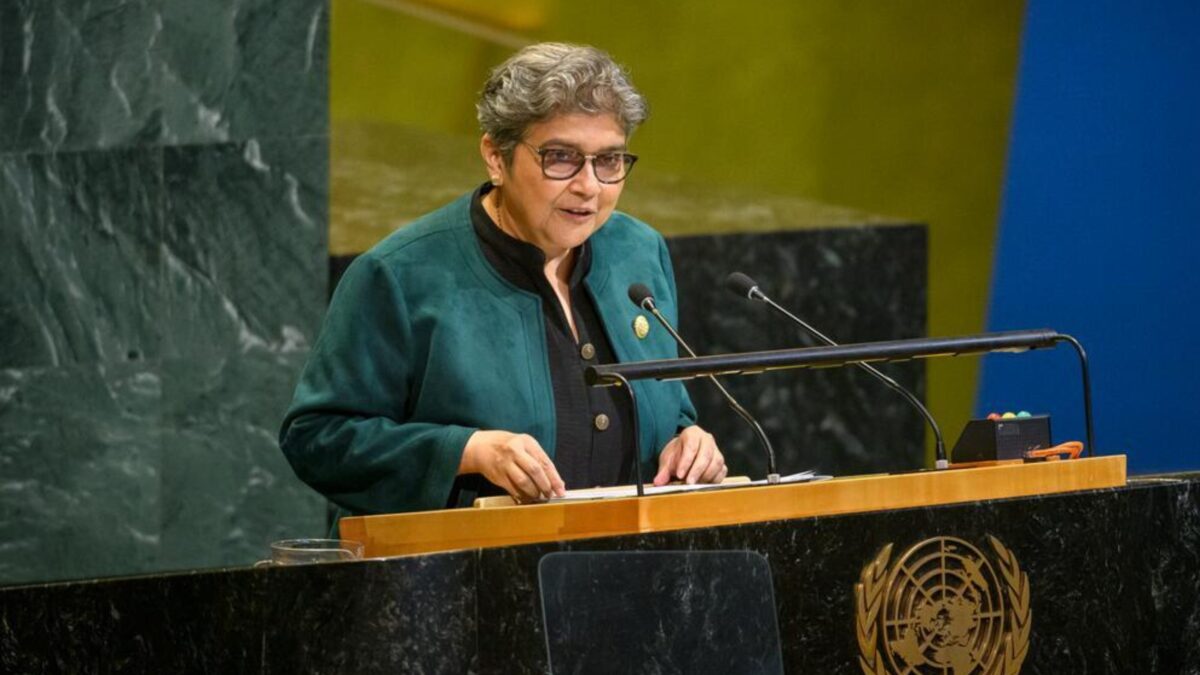
The incoming United Nations special representative for Afghanistan is facing calls to make human rights, particularly the rights of women and girls, a central priority as she prepares to lead the UN mission in a country where the Taliban have imposed sweeping restrictions on women’s education, employment and public life.
A Kabul resident, a human rights official and a political analyst said the new envoy should press for the reopening of secondary schools and universities to girls and women, the restoration of women’s right to work and stronger UN scrutiny of human rights violations.
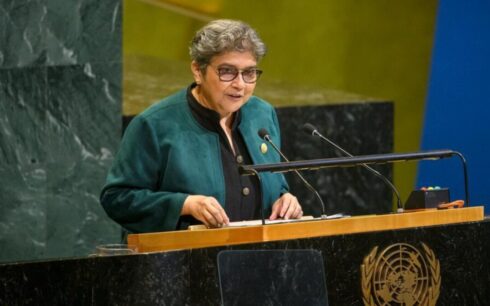
According to two diplomatic sources in New York who spoke to Amu, UN Secretary-General António Guterres has selected Rabab Fatima, a veteran Bangladeshi diplomat, as his new special representative for Afghanistan and head of the UN Assistance Mission in Afghanistan (UNAMA).
Fatima has more than three decades of diplomatic experience. Her appointment comes at a consequential moment for the UN mission, which has faced criticism over its ability to influence the Taliban on human rights while also leading international diplomatic engagement with the Taliban.
Over nearly five years of Taliban rule, UNAMA has monitored and reported on conditions in Afghanistan, coordinated with UN agencies responding to the humanitarian crisis and supported diplomatic engagement between the Taliban and the international community.
The mission has also been involved in the Doha process, a series of international meetings and working-level discussions involving the Taliban and foreign governments. Current working groups have focused on counternarcotics efforts and challenges facing Afghanistan’s private sector and banking system.
But UNAMA’s record has also drawn criticism from Afghans who say international diplomacy has produced little progress toward resolving the country’s political crisis or reversing the Taliban’s restrictions on fundamental rights.
Mohibullah Taib, a human rights official at Afghanistan’s permanent mission in Geneva, said the new envoy should work toward a political process aimed at establishing domestic legitimacy before seeking broader international recognition.
He called for engagement among different Afghan political constituencies, including the Taliban, to address the country’s political and social challenges.
UNAMA has repeatedly documented restrictions imposed by the Taliban and raised concerns about interference in humanitarian operations. But the UN mission itself has also been directly affected by the Taliban’s restrictions on women.
Afghan women employed by the United Nations have been barred by the Taliban from reporting to their offices, a restriction the organization has condemned but has been unable to reverse.
Shafiqullah Saighani, a political analyst, said the new envoy should ensure that serious human rights violations and restrictions in Afghanistan were fully and accurately documented.
“The hope is that the new representative will provide accurate and genuine representation in accordance with the UN Charter,” he said.
A Kabul resident said the incoming envoy should use the UN’s diplomatic role to amplify the concerns of Afghans, particularly women and girls.
“We want the new representative to work for peace, protect human rights, ensure humanitarian assistance and create opportunities for women to work and study,” the resident said. “We want UNAMA to carry our voices to the international community.”
The leadership transition comes as the Security Council has renewed UNAMA’s mandate for another year.
The resolution calls for the secretary-general to report to the Council every three months on developments in Afghanistan and requests a strategic review of UNAMA’s mandate.