Zamir Kabulov, Russia’s special envoy for Afghanistan, said one member of the Shanghai Cooperation Organization (SCO) is blocking efforts by the Taliban to deepen their participation in the regional bloc, despite support from other member states.
In remarks published Wednesday by the Russian newspaper Izvestia, Kabulov said the Taliban have formally expressed interest in obtaining full membership in the SCO but that the process has not moved forward because of opposition from a single member country.
“Formally, the Taliban want full membership in the Shanghai Cooperation Organization,” Kabulov said. “But because decisions are made by consensus and one member is opposed, this process has not yet begun.”
He did not identify the country in question but said that all other members maintain some level of engagement with the Taliban administration.
“I think this problem will be resolved in the future,” Kabulov added.
Although Kabulov did not name the opposing state, analysts quoted by Izvestia suggested that Pakistan could be the main obstacle, citing worsening relations between Islamabad and the Taliban over border tensions and security disputes.
Relations between Pakistan and the Taliban have deteriorated sharply in recent years, with Islamabad accusing Kabul of harboring militants responsible for attacks inside Pakistan. Taliban have repeatedly rejected the allegations, insisting they do not allow Afghan territory to be used against other countries.
A regional affairs analyst quoted by the newspaper said Pakistan is unlikely to support Afghanistan’s deeper integration into the organization while key security disputes remain unresolved.
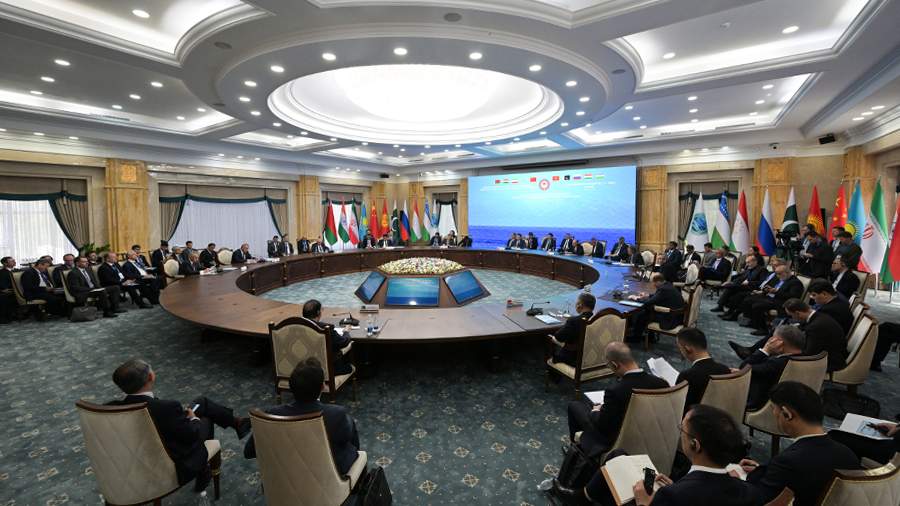
The comments highlight the uncertain status of Afghanistan within the SCO, a regional political and security bloc led by China and Russia that includes India, Pakistan and several Central Asian states.
Afghanistan joined the organization as an observer state in 2012. However, following the Taliban’s return to power in 2021, the country’s participation in SCO meetings and activities has largely been suspended. Afghan representatives last attended an SCO meeting in an official capacity in 2020.
The question of Afghanistan’s future role in the organization is further complicated by the Taliban’s international status. While Russia earlier this month became the first country to formally recognize the Taliban rule, other SCO members have not taken such a step, maintaining limited diplomatic engagement instead.
Nikolai Silayev, a Russian international relations researcher, told Izvestia that full participation by Afghanistan would remain difficult as long as the Taliban administration lacks broad international recognition.
“As long as the Taliban government is not formally recognized by all SCO members, it will not be possible to invite Afghanistan to participate fully in the organization’s activities,” he said.
Despite the impasse, Kabulov indicated that contacts between Russia and the Taliban would continue. He said Taliban representatives are expected to participate in this year’s Moscow Format consultations on Afghanistan.
The remarks come as Russia has expanded its engagement with the Taliban, positioning itself as one of the Taliban’s closest international partners while urging greater regional cooperation on Afghanistan’s security and economic challenges.
Analysts say Afghanistan is likely to remain in a diplomatic gray zone within the SCO until regional political tensions ease and member states reach a consensus on how to engage with the Taliban administration.