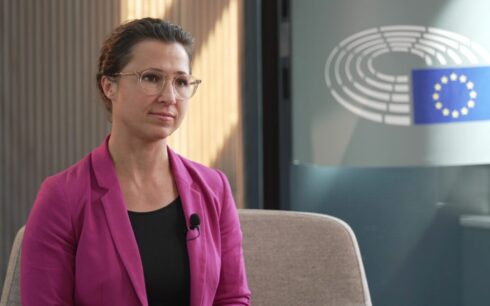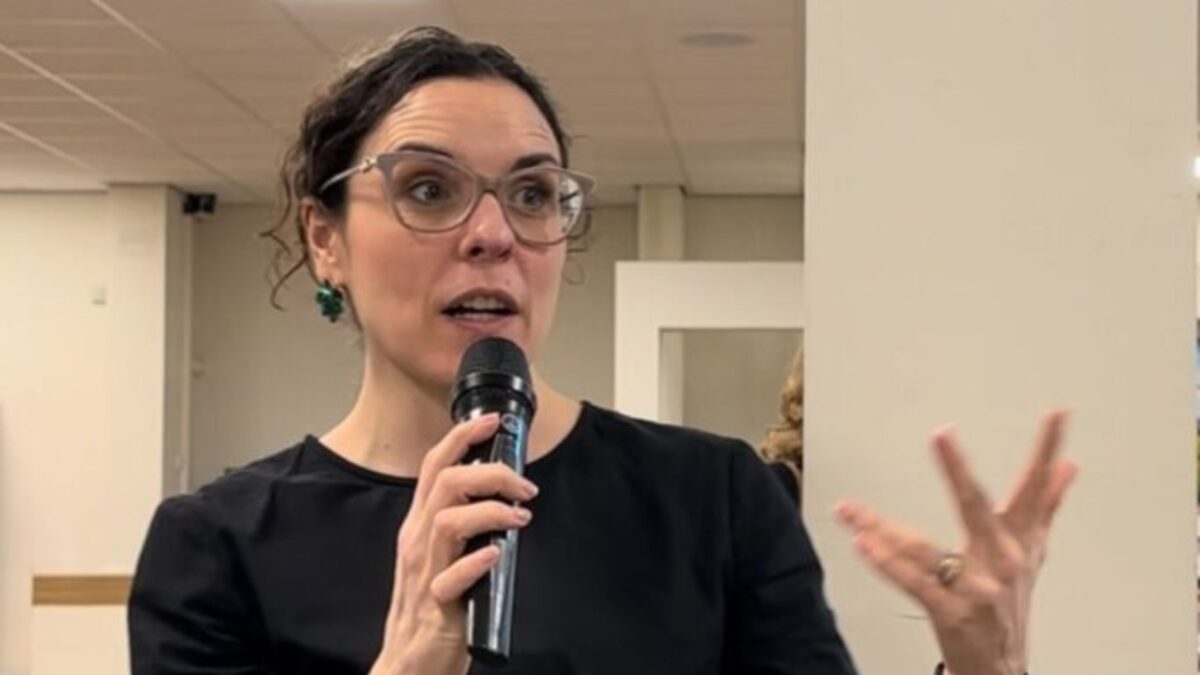
Rochelle García Hermida, a Spanish member of the European Parliament, on Tuesday apologized to Afghans after the European Union hosted a Taliban delegation in Brussels, arguing that the talks risk granting international legitimacy to a government accused of systematically repressing women and girls.
García Hermida, who is also chair of the European Parliament’s delegation for relations with Afghanistan, made the remarks during a parliamentary session hours after EU officials met with a five-member Taliban delegation to discuss migration and deportation issues.
“On behalf of 450 million Europeans, I am sorry that this European Parliament has not succeeded in stopping this madness of this meeting of the Taliban in Brussels, in the centre of our political and diplomatic power as European Union,” García Hermida said.
“I am sorry. We really, really have done our best.”
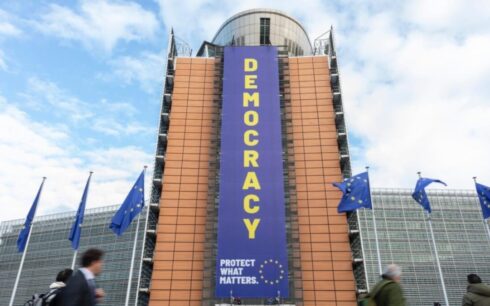
The EU hosted the Taliban delegation on Tuesday despite criticism from human rights organizations, Afghan activists and several European politicians who warned that the talks could undermine EU human rights principles and provide political legitimacy to the Taliban.
European officials have defended the meeting as a technical discussion focused on the return and readmission of Afghan nationals whose asylum applications have been rejected. The EU has stressed that the talks do not amount to recognition of the Taliban rule.
García Hermida rejected the notion that such engagement is without political consequences.
“When European democracy engages with them, it grants them a sense of international legitimacy,” she said. “The more they find acceptance on the global stage, the more emboldened they become and the harsher the oppression for my sisters back in Afghanistan.”
During her speech, García Hermida said she wanted to use her platform to amplify the voices of Afghan women and girls who, she said, had been silenced under Taliban rule.
She recounted a message she said she had received from an Afghan woman after posting a video in support of women’s rights in Afghanistan.
“After I shared a video supporting women in Afghanistan, the Taliban tracked down my location and left a threatening comment naming the country I currently live in,” the woman wrote, according to García Hermida.
The lawmaker also quoted messages from Afghan girls describing life under Taliban restrictions.
One Afghan girl, she said, asked whether European lawmakers could imagine telling their own daughters that they would be barred from attending school after sixth grade.
Another message referred to child marriage and the absence of meaningful consent for many Afghan girls.
“Will you feel safe in a country where child marriage is allowed by law and silence to the question, ‘Do you want to marry him?’ means yes?” García Hermida quoted the girl as saying.
She also highlighted concerns raised by members of Afghanistan’s Hazara community, who have repeatedly warned of discrimination and targeted violence.
“One message urged us to speak up specifically for Hazara women who face compounded persecution,” García Hermida said.
The remarks came as debate continues across Europe over engagement with the Taliban and efforts to increase deportations of Afghan nationals.
Human rights organizations, including Amnesty International and Human Rights Watch, have criticized the Brussels meeting, arguing that Afghanistan remains unsafe for returns and warning that engagement with Taliban authorities should prioritize human rights and accountability rather than deportation arrangements.
Since returning to power in August 2021, the Taliban have imposed sweeping restrictions on women and girls, including bans on secondary and university education, severe limits on employment and restrictions on freedom of movement. The United Nations has repeatedly condemned the measures and described them as among the most extensive violations of women’s rights in the world.
García Hermida ended her remarks with a message from another Afghan woman.
“Whoever negotiates with terrorists says something about themselves to the world,” she quoted. “They show their real face.”
Her comments underscored the growing divisions within Europe over how to engage with Taliban while responding to migration pressures and addressing Afghanistan’s deepening human rights crisis.