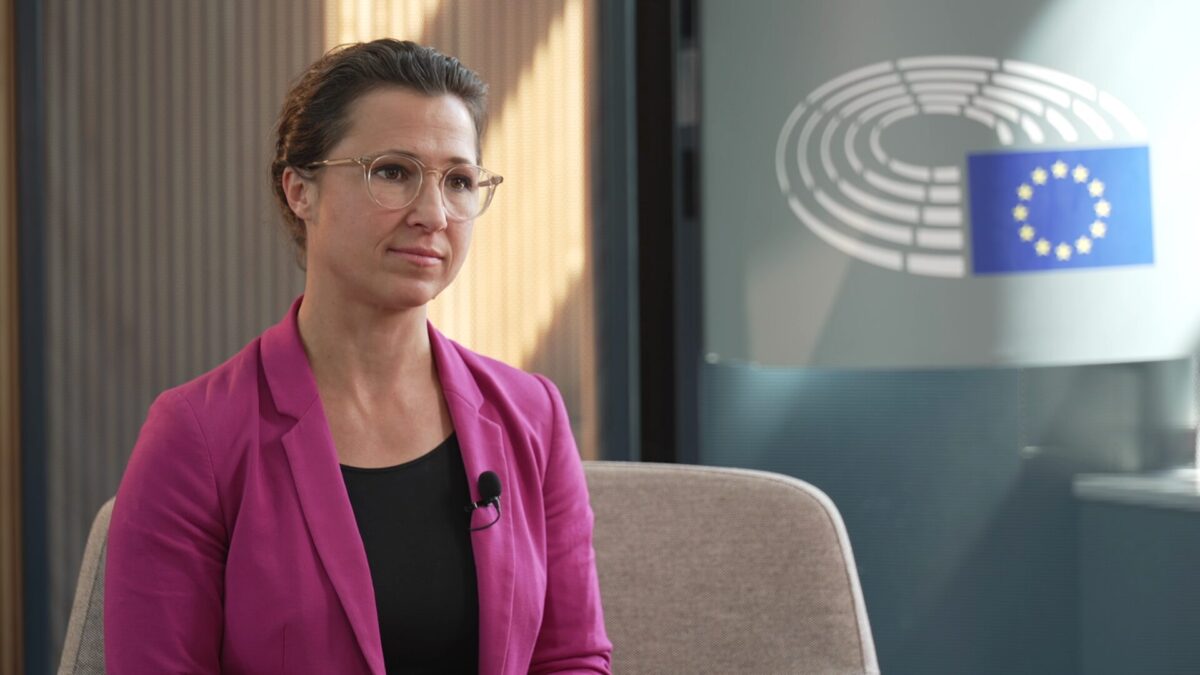
Following Tuesday’s meeting between Taliban delegation and EU officials in Brussels, Hannah Neumann, member of the European Parliament, said the talks provided political legitimacy to the Taliban despite EU assurances that the discussions were merely technical.
Neumann said the European Union’s decision to host Taliban representatives sent a political message regardless of the stated purpose of the talks.
“There is no such thing as technical talks with the Taliban,” Neumann wrote on X after the meeting concluded. “Every invitation, every visa and every official meeting sends a political signal.”
“The Taliban are not seeking technical discussions with the EU,” she added. “They are seeking legitimacy.”
The remarks came after the European Union on Tuesday hosted a five-member Taliban delegation in Brussels for discussions centered on migration, deportations and consular issues.
The Taliban delegation, led by Abdul Qahar Balkhi, spokesman for the Taliban’s Foreign Ministry, said the talks went beyond deportations and included discussions on restoring consular services for Afghans living in Europe, confidence-building measures and ways to address the challenges facing Afghans whose asylum applications have been rejected.
According to Balkhi, the delegation held both multilateral and bilateral meetings with representatives of European Union member states.
European officials, however, described the gathering as a technical meeting focused primarily on the return and readmission of Afghan nationals without legal residency rights in the bloc.
A spokesperson for the European Commission said officials from the Commission and representatives of 15 EU member states participated in the meeting, which was co-chaired by the Commission and Sweden.
The talks marked the first known visit by Taliban representatives to EU institutions since the group returned to power in Afghanistan in August 2021.
European officials have repeatedly stressed that engagement with Taliban authorities does not constitute recognition of the Taliban government, which remains unrecognized by the EU and its member states.
Brussels has argued that limited engagement is necessary to facilitate the return of Afghan nationals convicted of serious crimes or deemed security threats.
Critics say that distinction is increasingly difficult to maintain.
Neumann has been among the most vocal opponents of the meeting. Ahead of the talks, she joined former Afghan parliamentarians and other European lawmakers in an open letter urging the EU to cancel the invitation, arguing that the Taliban had failed to meet any of the bloc’s conditions for engagement, including respect for human rights, women’s rights and inclusive governance.
Human rights organizations have echoed those concerns. Amnesty International and Human Rights Watch have warned that engagement with the Taliban on deportation arrangements risks legitimizing a regime accused of widespread human rights abuses while exposing Afghans to potential danger if returned to the country.
Since returning to power, the Taliban have imposed sweeping restrictions on women and girls, including bans on secondary and university education, limitations on employment and restrictions on freedom of movement. The United Nations has described the measures as systematic discrimination and warned that the country’s human rights situation continues to deteriorate.
Belgium granted the Taliban delegation special one-day visas restricted to Belgian territory, allowing the representatives to attend the Brussels meeting while limiting their movement within the European Union.
Despite the criticism, the talks went ahead, highlighting the growing tension between European efforts to tighten migration policies and concerns that engagement with the Taliban could undermine the bloc’s human rights principles.