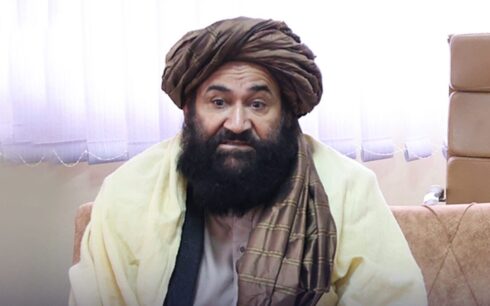
The European Union on Tuesday hosted a five-member Taliban delegation in Brussels despite criticism from human rights groups and European politicians who warned that the talks risked legitimizing the Taliban regime.
Abdul Qahar Balkhi, a Taliban spokesman for the foreign ministry who led the delegation, said the talks focused on restoring consular services for Afghans in Europe, confidence-building measures and the challenges facing Afghan migrants whose asylum applications have been rejected.
He said the visit and discussions with European officials had concluded.
According to Balkhi, the delegation held both multilateral and bilateral meetings with representatives of European Union member states.
The discussions covered the possible resumption of Afghan consular services in Europe, ways to improve engagement between the two sides and solutions for Afghans facing legal and residency challenges after unsuccessful asylum claims.
“The visit is expected to open new avenues for positive engagement, strengthen efforts to address the problems of Afghans living abroad, and expand cooperation based on mutual respect and shared interests,” Balkhi said.
The statement presented a broader agenda than that outlined by European officials, who have described the meeting primarily as a technical discussion on migration and deportation procedures.
A spokesperson for the European Commission said officials from the Commission and representatives of 15 EU member states attended the meeting, which was co-chaired by the Commission and Sweden. The discussions focused on the “return and readmission” of Afghan nationals without legal residency rights in the European Union.
According to a letter reviewed by Reuters, the talks were intended to address the return of Afghans whose applications to remain in the bloc had been denied.
European officials have insisted that the meeting does not constitute recognition of the Taliban regime, which remains unrecognized by the EU and its member states.
Brussels has argued that limited engagement with Taliban is necessary to facilitate the return of individuals convicted of serious crimes or deemed security threats.
The meeting has drawn criticism from human rights organizations and several European politicians, who argue that any official engagement risks granting legitimacy to a regime accused of widespread human rights abuses.
Hannah Neumann, a German member of the European Parliament, said ahead of the talks that “every invitation, every visa and every official meeting sends a political signal” and warned that the Taliban were seeking legitimacy rather than merely technical discussions.
Belgium granted the Taliban delegation special visas valid for one day and restricted to Belgian territory, allowing them to attend the Brussels meeting without access to the broader Schengen travel area.
The talks come as European governments face increasing pressure to expand deportations of Afghan nationals while rights groups warn that Afghanistan remains unsafe for returns.
Since returning to power, the Taliban have imposed sweeping restrictions on women and girls, including bans on secondary and university education, limits on employment and strict controls on public life. The United Nations and human rights organizations have repeatedly condemned the measures and warned that the country’s human rights situation continues to deteriorate.