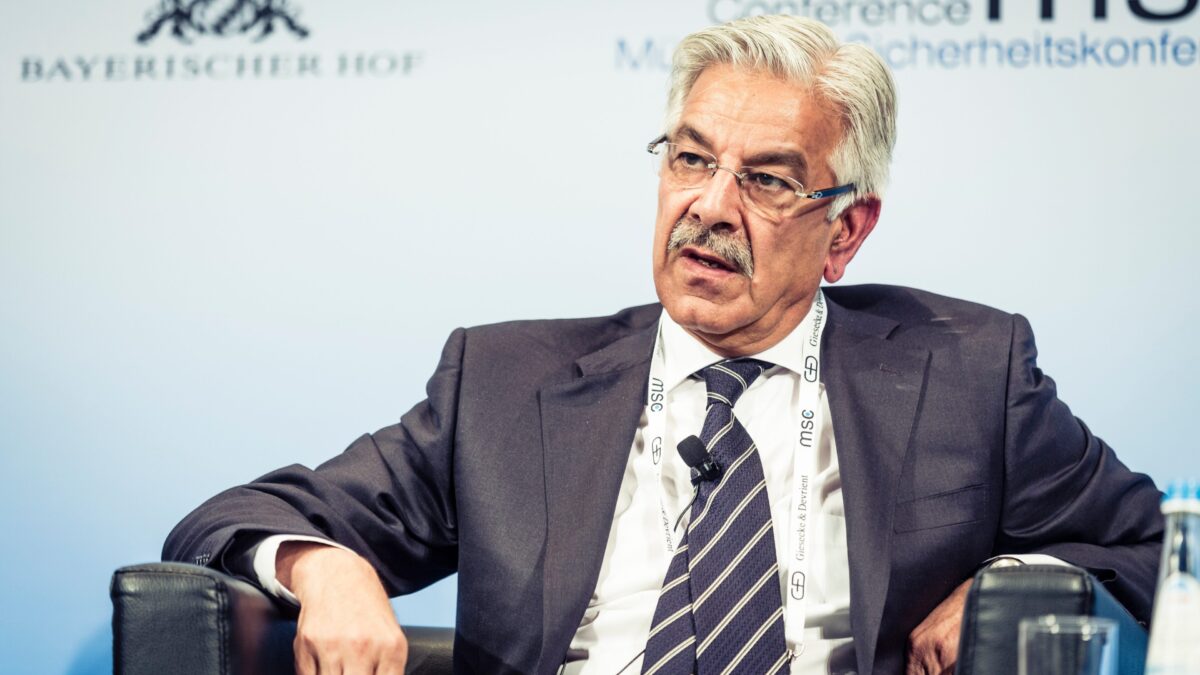
Pakistan’s defense minister, Khawaja Muhammad Asif, has accused the Taliban and India of supporting militant violence inside Pakistan, linking both to recent attacks in the country’s northwest.
In a statement following recent violence in Khyber Pakhtunkhwa Province, Asif called for a united and decisive campaign against militancy and said Pakistan faced threats from both external and internal actors.
“After last year’s defeat, Afghanistan is also promoting terrorism on Pakistani soil alongside India,” Asif said, according to remarks carried by Pakistani media. He also claimed that Indian efforts to destabilize Pakistan-administered Kashmir had failed.
The comments are the latest in a series of remarks by Pakistani officials on militant groups, including TTP, that they say operate from Afghanistan’s territory. Taliban have repeatedly rejected those remarks.
Taliban have denied providing support or sanctuary to militant groups, including the Tehreek-e-Taliban Pakistan (TTP), also known as the Pakistani Taliban. However, a UN monitoring group has reported that TTP has almost 6,000 fighters in Afghanistan.
Zabihullah Mujahid, the Taliban’s chief spokesman, has said the TTP is Pakistan’s internal problem and that Afghanistan’s territory will not be allowed to be used against other countries.
The presence of the TTP remains one of the most contentious issues in relations between Islamabad and the Taliban administration.
Pakistan has blamed the group for a surge in attacks since the Taliban returned to power in Afghanistan in 2021. The TTP has claimed responsibility for numerous attacks targeting Pakistani security forces.
The dispute has contributed to a sharp deterioration in relations between the two sides. Pakistan has carried out multiple cross-border airstrikes and artillery attacks inside Afghanistan, saying it was targeting militant hideouts.
Taliban have condemned those operations as violations of Afghanistan’s sovereignty.
The United Nations Assistance Mission in Afghanistan (UNAMA) and other UN bodies have reported civilian casualties from some of the strikes, raising concerns about the humanitarian impact of the cross-border violence.
The remarks also come two days after Taliban said they had carried out airstrikes on Daesh hideouts in Baluchistan and Khyber Pakhtunkhwa.