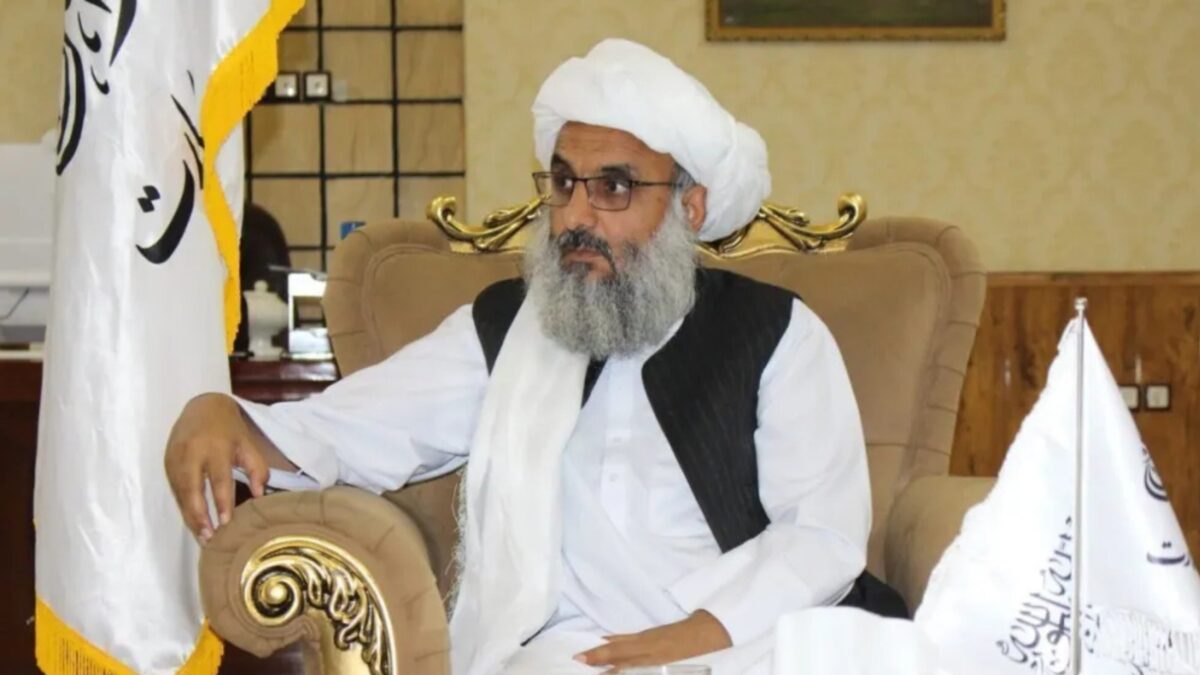
Taliban governor in Herat has acknowledged the recent detention of women and girls in the western city, claiming those arrested suffered from what he described as “psychological” and “religious” problems.
In comments published by Al-Emarah, a Taliban-affiliated media outlet, Noor Ahmad Islamjar confirmed that women had been detained in recent days for allegedly failing to comply with the Taliban’s dress code.
The remarks appear to contradict earlier statements by local Taliban officials, who denied that women had been arrested over hijab-related issues.
The UN Assistance Mission in Afghanistan (UNAMA) has confirmed that at least 30 women were detained in Herat between June 6 and June 7 by the Taliban’s morality police for allegedly violating dress requirements.
The detentions sparked protests in Herat and drew criticism from international human rights organizations and UN officials.
Islamjar also claimed that the women who were detained had spent many years living in neighboring countries and had, in his view, been influenced by foreign cultures. While he did not name a specific country, his remarks appeared to refer to Afghan refugees who had lived in Iran.
He said Taliban had consulted religious scholars, their local officials and community elders for an extended period before deciding to take action against women accused of violating dress regulations.
Islamjar also claimed that the arrests were carried out by female personnel working with Taliban and no male officers participated in the operations.
He dismissed videos and reports circulating on social media about the treatment of detained women, claiming the footage had been fabricated using artificial intelligence.
He further accused some officials from Afghanistan’s former government of attempting to create public unrest through what he described as misinformation.
The comments come amid growing scrutiny of the Taliban’s enforcement of restrictions on women and girls.
Earlier this week, protests erupted in the Jebrail area in northwest of Herat City after reports of the detentions. The UN has confirmed that an 11-year-old boy was killed and several others were injured when Taliban moved to disperse demonstrators. The UN mission said it is also investigating reports of a second fatality.
Human Rights Watch, UN Women, Richard Bennett, the UN special rapporteur on human rights in Afghanistan, and other UN experts have condemned the arrests and the subsequent use of force against protesters.
Taliban have increasingly tightened restrictions on women since returning to power in August 2021, including bans on secondary and university education for girls, limits on women’s employment and broader restrictions on their participation in public life.