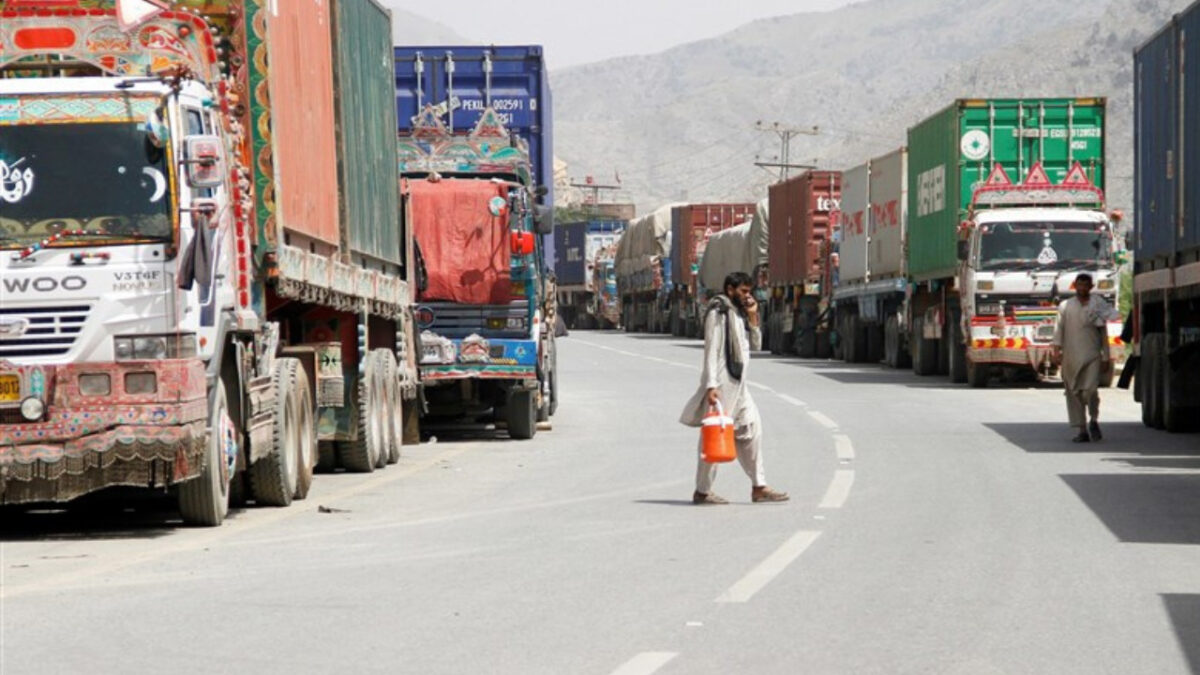
Local elders from eastern Afghanistan and neighboring Pakistan have reached an agreement to reopen key route connecting remote districts in Nuristan, according to people familiar with the talks.
The agreement, reached after two days of talks between tribal leaders from Nuristan and Pakistan’s Chitral region, allows for the reopening of routes linking the Kamdesh and Barg-e-Matal districts, sources told Amu TV on Wednesday.
The discussions were held on the Pakistan side of the Durand Line and did not involve Taliban representatives, the sources said. The meeting reportedly took place at a Pakistani military facility and concluded with an understanding to restore movement along the affected corridors.
The routes had been closed for nearly two months after border clashes between Taliban and the Pakistani military started on Feb. 26, cutting off access to food, medicine and health care for local residents.
“The people of Kamdesh and Barg-e-Matal have faced serious challenges,” one resident said. “All roads were blocked, and people had no access to food, medicine or hospitals.”
The reopening, driven by community-level negotiations, reflects growing efforts by local actors to ease tensions and restore basic connectivity in areas affected by cross-border conflict.
Taliban governor’s spokesman in Nuristan confirmed that an agreement had been reached between elders on both sides of the border and said that broader discussions with Pakistan were continuing to address tensions.
The development comes as formal talks between Taliban and Pakistan have failed to produce a lasting agreement. Several rounds of negotiations held in cities including Urumqi, Doha, Istanbul and Riyadh have ended without resolving key disputes, particularly over security concerns and militant activity. The Urumqi talks were held this month for a week.
Recent tensions have escalated into periodic clashes and airstrikes, leading to the closure of major crossings and routes between the two countries. The disruptions have had significant economic and humanitarian consequences, with reports of millions of dollars in losses and severe hardship for border communities.
Analysts say the continued mistrust between Taliban and Pakistani authorities has limited the effectiveness of formal diplomacy, increasing the importance of informal, locally driven agreements such as the one reached in Nuristan.
For now, residents say the reopening of the routes offers some relief, though concerns remain about the continuation and security of access in the face of ongoing tensions.