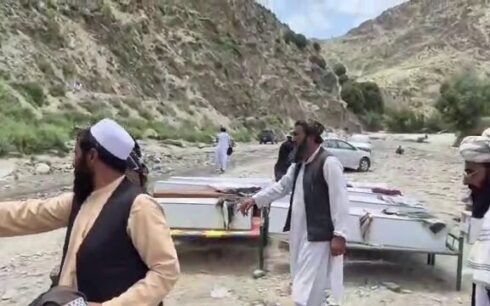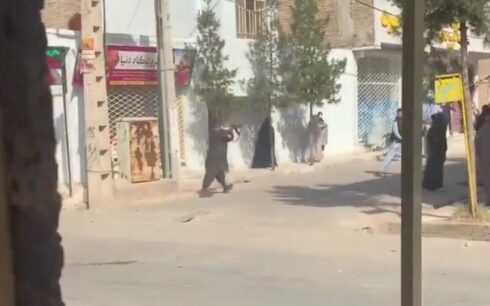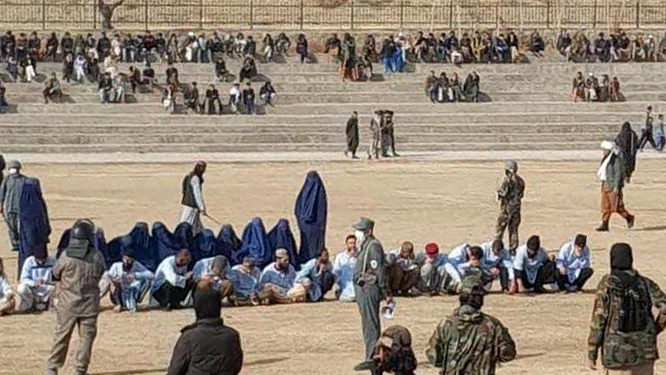
Taliban flogged at least 1,186 people and carried out six public executions in Afghanistan during the solar year 1404 (March 2025 to March 2026), according to official statements and data compiled by Amu TV.
The figures, based on statements from the Taliban’s Supreme Court, show a continued use of corporal punishment across much of the country. The total does not include the final 12 days of the month of Saratan (July 11 to July 22), suggesting the number of floggings may be higher.
The punishments were carried out in dozens of provinces, including Kabul, Herat, Balkh, Kandahar, Nangarhar, Khost, Badakhshan, Ghor, Paktia, Paktika, Faryab, Laghman, Kapisa, Parwan, Uruzgan, Zabul, Kunar, Maidan Wardak, Ghazni, Kunduz, Baghlan, Takhar, Badghis, Farah, Nimroz, Logar, Jawzjan, Helmand, Sar-e-Pul, Daikundi and Bamiyan.
According to Taliban court statements, the use of corporal punishment increased in the latter months of the year, with women also among those punished. Official figures indicate that nearly 100 women were flogged over an eight-month period, many of the punishments carried out in public.
Human rights advocates say the expansion of corporal punishment reflects broader restrictions under Taliban rule and raises serious concerns about due process and fundamental freedoms.
Abdul Ahad Farzam, a human rights researcher, said the continuation of such practices could have long-term consequences.
“These punishments violate basic human rights standards and create a climate of fear in society,” he said.
Public executions were also carried out during the year under the principle of qisas, or retributive justice. Residents in at least four provinces witnessed such executions.
In the most recent case, a man was executed in a sports stadium in Khost in front of thousands of spectators, including children. Additional executions were reported in Badghis, where three people were put to death, as well as one case each in Farah and Nimroz.
In addition to corporal punishment and executions, the Taliban introduced a new penal code during the year, drawing widespread international criticism over its severity and lack of due process protections.
Taliban also expanded enforcement against dissent. In one case, a man in Kapisa province was sentenced to 39 lashes and one year and six months in prison for what Taliban described as “propaganda against the system.” In another case in Badghis, an individual was flogged and sentenced to prison for allegedly insulting Taliban leader Hibatullah Akhundzada.
Despite mounting criticism, Taliban have defended the punishments as enforcement of Islamic law.
Rights groups and international observers, however, say the continuation of such practices further isolates Afghanistan and raises serious concerns about the protection of basic freedoms under Taliban rule.