At least 42 civilians have been killed in Afghanistan over the past six days in cross-border clashes between Taliban and Pakistani forces, the United Nations said.
From the late evening of Feb. 26 through March 2, the United Nations Assistance Mission in Afghanistan, UNAMA, recorded at least 42 people killed and 104 wounded, including women and children. The figures are preliminary, the mission said.
The casualties include those caused by indirect fire during cross-border fighting that struck residential areas in Paktia, Paktika, Nangarhar, Kunar and Khost provinces, as well as airstrikes in Paktika and Nangarhar.
In a statement issued in Kabul, UNAMA urged both sides to halt the clashes, warning that the violence is worsening Afghanistan’s already severe humanitarian crisis. The mission called on all parties to comply with international law, including international humanitarian law, and to protect civilians.
The fighting has also displaced large numbers of people. According to preliminary data compiled by the United Nations Office for the Coordination of Humanitarian Affairs, about 16,400 households have fled areas affected by the clashes across Paktia, Paktika, Nangarhar, Kunar and Khost.
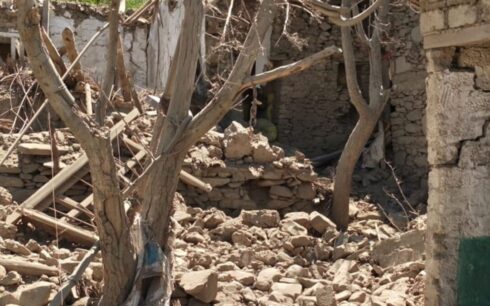
Hundreds of families still displaced by the August 2025 earthquake in Kunar province — the deadliest quake in Afghanistan in nearly three decades — have also been advised to leave their current locations as a precaution, either returning to their home districts or staying with relatives.
The violence has disrupted humanitarian operations. Movement restrictions in border areas have limited aid agencies’ ability to deliver assistance, leaving Afghan returnees from Pakistan particularly vulnerable, the United Nations said.
Humanitarian and medical facilities have sustained damage, including the emergency hospital at the Torkham border crossing and a transit center operated by the International Organization for Migration.
The World Food Program has paused activities in the affected areas, interrupting food distributions for roughly 160,000 people. Several of the provinces hit by the fighting are already experiencing critical levels of acute malnutrition.
The United Nations also warned that a potential rise in Afghan returnees along the western border with Iran could further strain limited humanitarian resources.