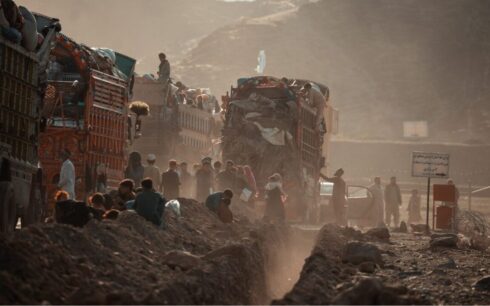
Thousands of families who have returned to Afghanistan from neighboring countries after years of displacement are observing Ramadan under severe economic strain, the International Organization for Migration said, citing widespread shortages of food, income and shelter.
In a statement marking the holy month, the agency said many returnees are struggling with damaged housing, limited access to basic services and few livelihood opportunities. The challenges have become more acute during Ramadan, a time traditionally centered on shared meals, prayer and family gatherings.
Across Afghanistan, decades of conflict, economic crisis and repeated humanitarian shocks have forced families from their homes. Many who have returned in recent months have found communities ill-equipped to absorb large numbers of people at once, the agency said.
Among them is Mahboba, 36, who returned to the Surkh Rod district of Nangarhar Province in eastern Afghanistan after spending her entire life in Pakistan. She came back in 2025 with her three children, part of a broader wave of more than two million Afghan migrants who have returned from neighboring countries, according to aid agencies.
The return was abrupt, she said. The family arrived with few belongings, limited savings and no extended family to rely on.
“In Pakistan, there was always something for our iftar,” Mahboba said in the agency’s account. “Neighbours sent cooked food, and my children never went to sleep hungry. Since returning, daily life has become a struggle. With no stable income and no family to turn to, hunger is my children’s greatest concern.”
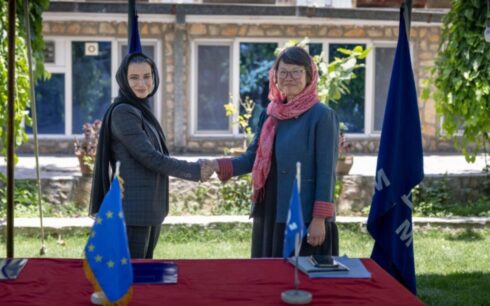
The migration agency said it provided Mahboba with cash assistance to cover immediate expenses such as food and rent. She later enrolled in a tailoring course at a community resource center supported by the organization, in hopes of rebuilding a livelihood. While the training has offered a measure of stability, her income remains uncertain.
Aid groups have warned that Afghanistan continues to face one of the world’s most severe humanitarian crises, with widespread poverty and high levels of food insecurity. For families returning after years abroad, the move home has often marked the beginning of a new phase of hardship rather than its end.
The International Organization for Migration said it is providing emergency aid, shelter support and livelihood assistance to displaced and returning families during Ramadan. But it cautioned that needs remain vast, particularly for women-headed households and families with limited support networks.
For many returnees, the agency said, faith has become a source of resilience as they navigate hunger and uncertainty during the holy month.