At least 70 civilians were killed and 478 injured in Afghanistan during the final three months of 2025 as a result of border clashes between Pakistan and Taliban and cross-border attacks involving Pakistani military forces, the United Nations Assistance Mission in Afghanistan (UNAMA) said in a new report released on Sunday.
UNAMA said most of the civilian casualties occurred during a sharp escalation in cross-border tensions between Taliban and Pakistan’s military between Oct. 10 and Oct. 17, a period that alone accounted for more than 500 civilian casualties, including 47 deaths and 456 injuries.
The UN mission said it has documented civilian casualties from cross-border clashes with Pakistani forces since 2011, but noted that the number of casualties recorded between Oct. 1 and Dec. 31, 2025, far exceeded the annual totals seen in previous years.
According to UNAMA, heavy fighting involving artillery, mortar fire and aerial attacks was reported in several border provinces, including Kandahar, Khost, Paktika, Kunar, Paktya and Helmand.
On the night of Oct. 11, cross-border clashes erupted in Paktya and Kunar provinces, continuing into the following morning. In Paktya’s Dand-e-Patan district, six civilians were injured when mortar rounds reportedly fired by Pakistani forces struck residential homes. In Kunar’s Nari district, at least 11 civilians, including women and children, were injured in similar incidents, UNAMA said.
The violence intensified on Oct. 15, when UNAMA documented 457 civilian casualties in a single day – 35 killed and 422 injured – with nearly 90% of them occurring in Spin Boldak district of Kandahar province. The U.N. mission said sustained exchanges of heavy weapons and subsequent aerial attacks destroyed homes and killed entire families, many of them children.
In one airstrike in Spin Boldak that afternoon, at least seven civilians were killed and 30 wounded, including several women and children from the same family. UNAMA said the youngest victim was three months old.
On the same day, two explosions struck a residential area in Kabul’s PD4 district, killing at least nine people and injuring at least 37 others. Witnesses told UNAMA that rockets struck an oil tanker and nearby homes, causing widespread destruction. Residents reported hearing aircraft or drones overhead at the time of the explosions.
Also on Oct. 15, Pakistani forces reportedly fired on journalists covering the clashes in Khost province, killing one reporter and wounding another. Several other civilians, including labourers and children, were injured by gunfire and mortar rounds in Khost and Paktika that day.
Although both sides announced a ceasefire on the evening of Oct. 15, UNAMA said civilian casualties continued after the declaration. Shelling and airstrikes in Kandahar, Khost and Paktika in the days that followed killed and wounded additional civilians, including people returning from prayers and families inside their homes.
In November and December, UNAMA documented further incidents, including airstrikes that killed children in Khost, Paktika and Kunar provinces, and a shooting on Dec. 4 in Paktika in which Pakistani border forces opened fire on labourers crossing the border, killing three men.
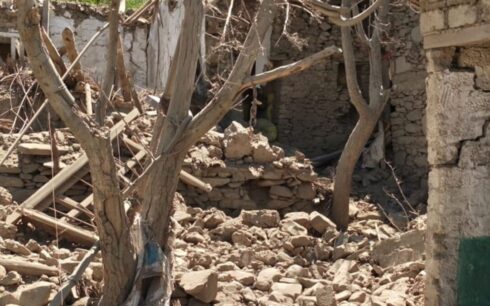
UNAMA said several victims and family members reported permanent disabilities, including blindness and amputations, as well as long-term psychological trauma. Hundreds of homes and businesses were damaged or destroyed, livestock were killed, and many families – particularly in Spin Boldak – were displaced multiple times due to repeated shelling.
The Taliban administration said it considered UNAMA’s findings on civilian casualties from border clashes to be “close to reality,” acknowledging that women, children and athletes were among those killed. It did not comment directly on Pakistan’s role in the incidents.
Pakistan has not yet publicly responded to the latest UNAMA report.