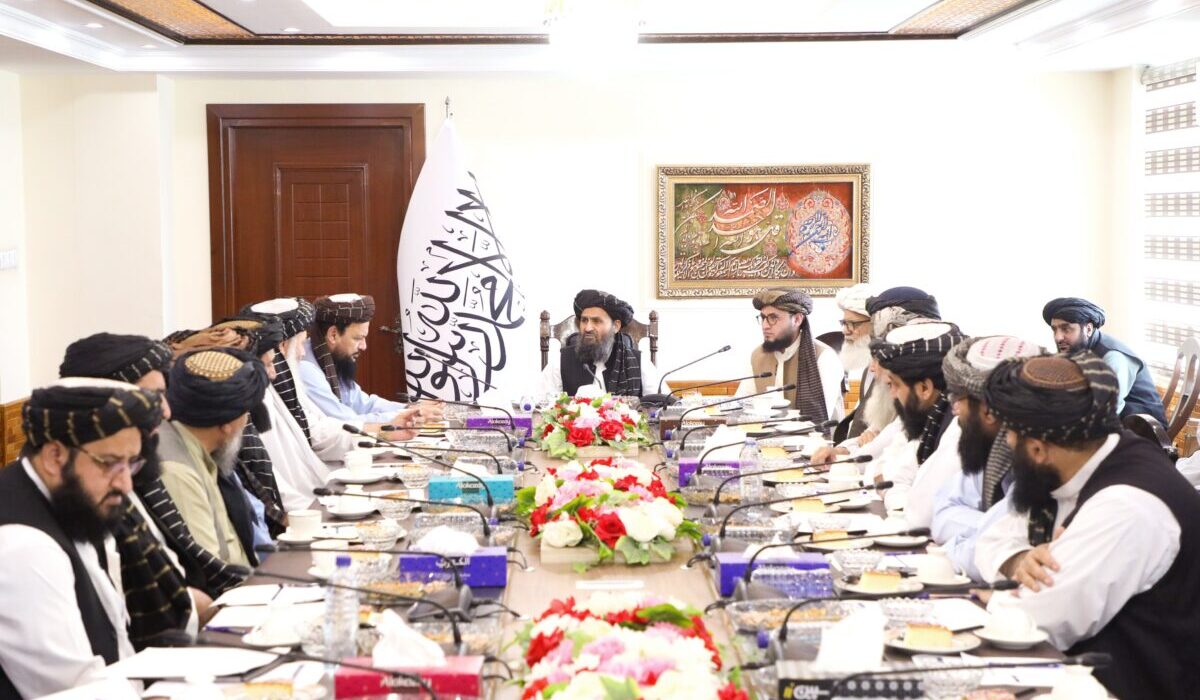
The Taliban deputy chief minister’s office said on Tuesday it had approved 21 development projects, including the construction of hospitals, worth about 2.5 billion Afghanis ($38 million).
The projects were endorsed at a meeting of the Taliban’s procurement commission chaired by Abdul Ghani Baradar, the Taliban’s deputy chief minister for economic affairs, the office said in a statement.
The statement said that 33 projects were submitted for approval, of which 21 were cleared, while seven others were approved with amendments. One project was returned to a second round of national open bidding, and another was suspended due to deficiencies in the previous contractor’s performance.
The commission also decided to form a committee to review existing contracts of one company and report its findings to the leadership of the National Procurement Commission, the statement said.
Approved and amended projects include the procurement of scanners for customs facilities at airports in Kabul, Herat, Nangarhar, Balkh and Khost; rehabilitation of the Gardez–Khost highway; construction of police headquarters buildings in Ghazni and Farah; feasibility studies and detailed design work for the Sultan Ibrahim irrigation dam in Sar-e Pol province; electricity supply projects in several districts of Sar-e Pol; and the construction of public hospitals in multiple provinces.
The list also includes the completion of unfinished electricity transmission and distribution projects in several parts of the country.
The statement said all of the projects would be financed from domestic resources.
Afghanistan has faced severe economic constraints since the Taliban returned to power in 2021, with international sanctions, frozen central bank assets and a sharp drop in foreign aid limiting public spending. Taliban have said they are relying on domestic revenues to fund infrastructure and public services, while international institutions continue to warn that investment levels remain too low to support sustained economic growth.