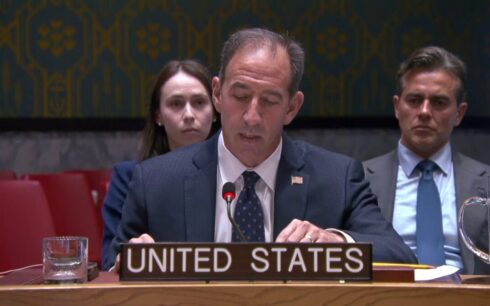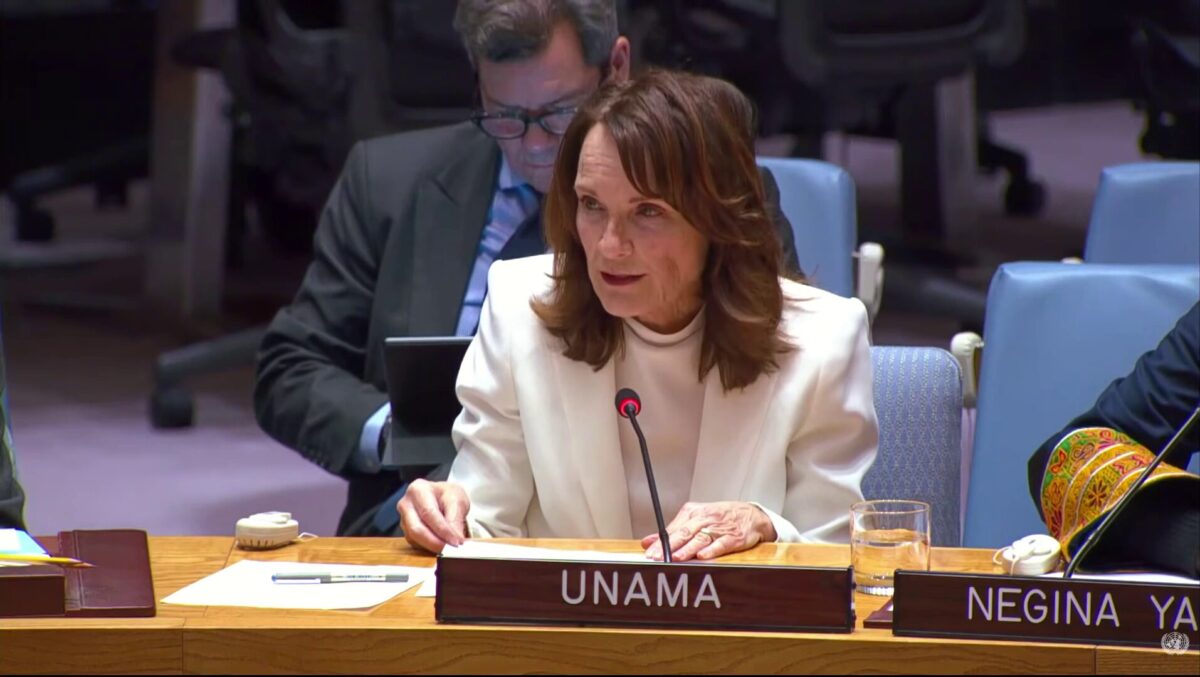
UNAMA Deputy Chief Georgette Gagnon told the UN Security Council that the Taliban continue to miss or reject critical opportunities to engage multilaterally with the international community, warning that this persistent refusal risks further disengagement, particularly from donor countries increasingly frustrated by the lack of meaningful cooperation.
Gagnon said the principles of dignity, equality, and justice embedded in the Universal Declaration of Human Rights remain profoundly relevant for Afghans, who continue to endure “multiple crises” under enormous strain. She stressed that the Afghan people’s resilience is remarkable but “under severe pressure,” requiring urgent international attention and sustained support.
Gagnon highlighted that women and girls remain systematically excluded from nearly all aspects of public life. The bans on secondary and tertiary education are now entering their fourth year, depriving Afghanistan of future female doctors, entrepreneurs, teachers, and leaders. Media freedoms are also shrinking, with journalists facing intimidation, arrests, and censorship, further narrowing public debate and denying Afghans a voice in decisions shaping their future, she said.
She described widespread infringements on daily life through enforcement of the Taliban’s “morality law” and emphasized that human rights abuses are only one dimension of the crisis. Afghanistan is also confronting a humanitarian emergency of staggering proportions, with more than 23 million people projected to need assistance in 2026.
According to here, compounding the crisis is the mass influx of returnees: nearly 2.5 million Afghans returned from Iran and Pakistan in 2025—many involuntarily—amounting to a 6% population increase. Most arrive with few belongings to communities already lacking jobs and basic services, she said.
She added that despite an estimated 4.5% GDP growth, the World Bank projects a 4% decline in per capita income, marking the third consecutive year of contraction.
Gagnon noted that while the Taliban’s new National Development Strategy emphasizes economic self-sufficiency and trade transit, these ambitions are undermined by policies that deter investment and restrict economic participation—especially for women. Many skilled female returnees could help revive the economy, she said, but are barred from doing so.
She condemned the continued ban on UN female national staff entering UN premises, calling it a violation of human rights and the UN Charter, and a direct impediment to the mission’s ability to carry out its mandate. UNAMA has repeatedly raised the issue, she said, urging Security Council members to ensure the situation “does not become normalized.”
Gagnon also pointed to the Taliban’s sudden nationwide shutdown of telecommunications earlier this year as a stark example of governance driven by internal divisions and ideological impulses. The blackout had life-threatening consequences, cutting off access to healthcare, emergency services, business operations, humanitarian efforts, and communication between the diplomatic community in Kabul and their capitals, she said.
The decision was ultimately reversed by what she described as the more “pragmatic faction” within the Taliban.
“This incident provides a vivid snapshot,” Gagnon said, noting the ongoing struggle between those within the Taliban authorities who seek isolation and those who recognize that Afghanistan “cannot survive” without international connection.
Reaffirming the international community’s shared goal—laid out in the 2023 Independent Assessment and Security Council Resolution 2721—Gagnon said the objective is an Afghanistan at peace and fully reintegrated into the international community once it meets its international obligations. “The objective is not the reintegration of Afghanistan under the de facto authorities as they currently are,” she stressed.
She said the United Nations remains committed to principled and pragmatic engagement and has proposed a political roadmap through the Doha process to address obstacles preventing Afghanistan’s reintegration, including governance, counterterrorism commitments, and human rights protections.