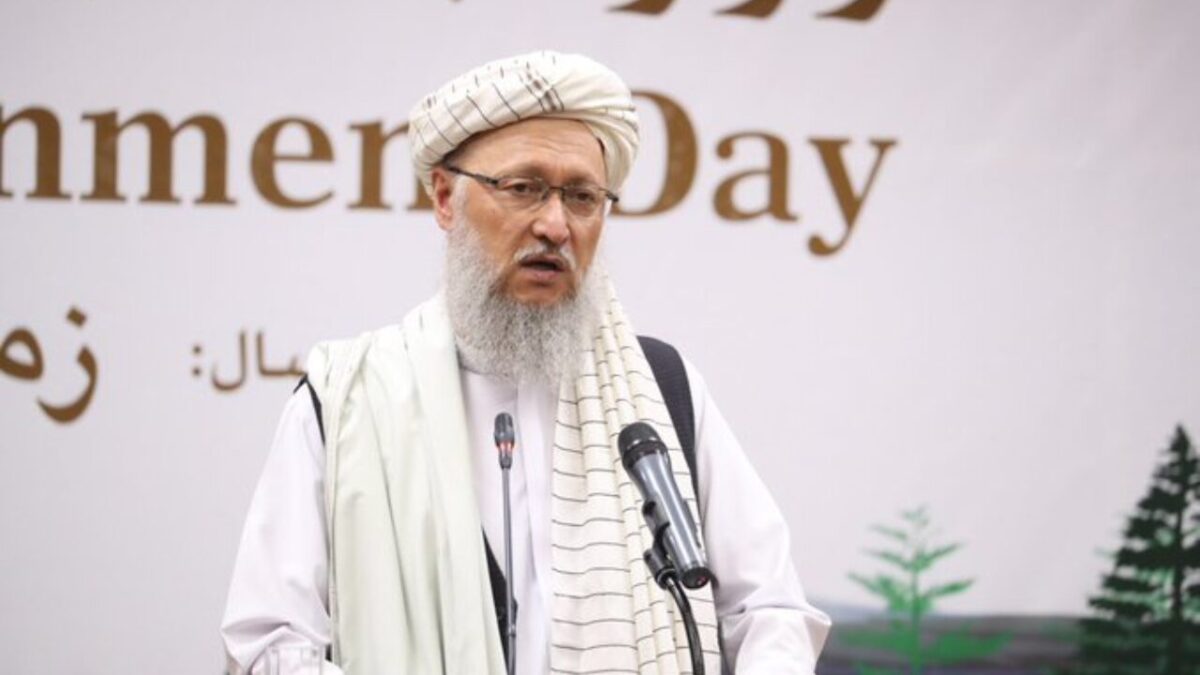
Abdul Salam Hanafi, the Taliban’s deputy administrative chief minister, at a session in Kabul on Wednesday called for a peaceful resolution to rising tensions with Pakistan, stating that “conflict benefits no side” and that disputes should be addressed through “a reasonable and mutually respectful framework.”
Hanafi reiterated the Taliban’s stated foreign policy of pursuing positive relations with all countries.
“We have not attacked anyone,” Hanafi said. “But if there is aggression against our land, we reserve the right to defend ourselves — an Islamic, national, and international right.”
His comments come amid a sharp deterioration in relations between Pakistan and Taliban, following recent cross-border clashes, stalled diplomatic talks, and Islamabad’s mounting security concerns.
Earlier this week, Pakistan’s Interior Minister, Mohsin Naqvi, ruled out further negotiations with the Taliban under current conditions, citing continued cross-border threats.
“Pakistan cannot pursue dialogue while facing ongoing terrorist threats,” Naqvi said in a meeting with US chargé d’affaires Natalie Baker in Islamabad, pointing to Afghanistan-based militants whom Pakistani officials accuse of staging attacks from sanctuaries across the border.
Talks between the two sides, held in Istanbul earlier this month, ended without progress. Taliban negotiators reportedly declined to provide written assurances that Afghanistan’s territory would not be used by militants to launch attacks inside Pakistan.
The Taliban, in turn, have accused Islamabad of making “unrealistic demands,” particularly its insistence that the Taliban neutralize Tehrik-i-Taliban Pakistan (TTP).
Tensions escalated further after eight days of armed clashes between Taliban and Pakistani forces in October, prompting the closure of major border crossings. The closures have brought trade between the two countries to a standstill, causing financial losses on both sides and exacerbating food price inflation inside Afghanistan.
In his remarks, Hanafi also urged Afghan business leaders and the people to support returning refugees and those affected by natural disasters as the country braces for winter. He claimed that since the Taliban returned to power in August 2021, some 4.5 million Afghans have returned to the country — many of them deported under pressure from neighboring Iran and Pakistan.
“These returnees often come with no basic possessions or means of survival,” Hanafi said.
In recent months, Pakistan and Iran have both intensified the deportation of Afghan migrants, many of whom had lived abroad for years. Human rights groups have criticized the removals, noting that many families are being returned to a country still grappling with conflict-driven economic collapse and limited infrastructure.
At the same event, Taliban economy minister Din Mohammad Hanif outlined their economic priorities, which include improving the business environment, boosting exports, expanding e-commerce, launching transport corridors, and establishing industrial parks and economic zones.