Pakistan is at risk of losing its trade foothold in Afghanistan and potentially lucrative markets in Central Asia if border closures and a trade halt with Kabul persist, the Pakistan-Afghanistan Joint Chamber of Commerce and Industry warned.
Zia-ul-Haq Sarhadi, the chamber’s vice president, told local media that Pakistan had recently signed key trade agreements with Central Asian countries. However, ongoing tensions with the Taliban threaten to derail access to those markets.
“The economic opportunities in the region are immense,” Sarhadi said. “But without restoring trade ties with Afghanistan, Pakistan may lose its strategic position as a commercial gateway to Central Asia.”
The warning comes as cross-border trade between Pakistan and Afghanistan enters a second month of near-total suspension, following rising political and military tensions between the two sides. Trade volume, once valued at nearly $2 billion annually, has largely come to a halt.
Estimates suggest Pakistan has already lost access to a market worth more than $1 billion in Afghanistan. In turn, Afghanistan has lost entry to Pakistan’s $600 million market. Transit trade — valued at over $500 million annually — has also stalled.
More than 5,500 shipping containers loaded with Afghan commercial and transit goods remain stuck in Pakistan, awaiting the reopening of border crossings.
Before the border closures, Pakistan exported between $100 million and $200 million in goods monthly to Afghanistan. Major exports included rice, fresh fruit, pharmaceuticals, cement, textiles, personal care items, shoes and plastic piping.
Afghanistan, in turn, exported fresh produce, coal, gemstones, talc, medicinal herbs and raw cotton to Pakistan.
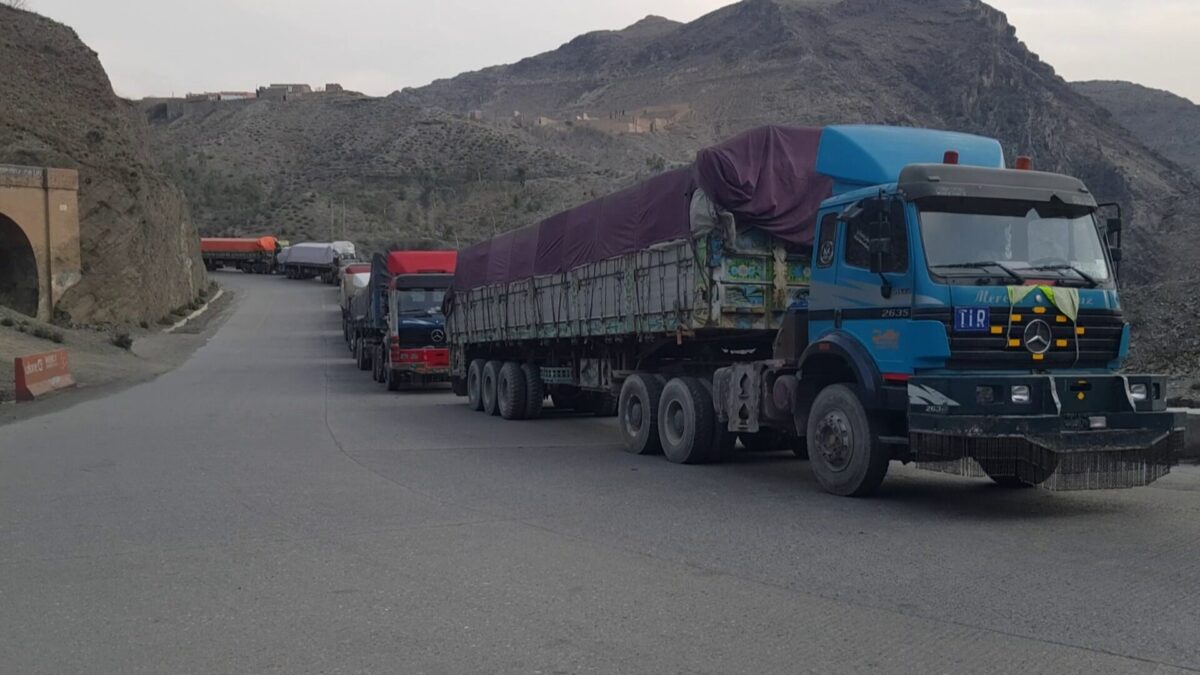
Now, long lines of trucks and containers are backed up on both sides of the border, unable to move.
In a statement issued Wednesday, the Taliban advised Afghan importers to seek alternative trade routes and markets. They also gave pharmaceutical importers a three-month deadline to stop sourcing medicine from Pakistan, citing concerns about quality.
Meanwhile, The Express Tribune reported that Pakistani customs authorities have begun blocking Afghan shipments entering via Iran at the Taftan border crossing. Officials said the goods were attempting to exploit an “early clearance” mechanism.
Analysts warn that continued political deadlock between Islamabad and Taliban could inflict long-term economic damage and hinder regional trade integration efforts.
“Afghanistan and Pakistan have deeply interdependent economies,” said Siyar Quraishi, an Afghan economic analyst. “The current impasse not only endangers bilateral commerce but also threatens broader regional connectivity.”
Tensions have escalated in recent months amid mutual accusations of cross-border militancy and security breaches. Talks held in Istanbul aimed at easing tensions have so far failed to produce results.
As the diplomatic rift deepens, businesses on both sides remain in limbo, with millions of dollars in trade and transit hanging in the balance.