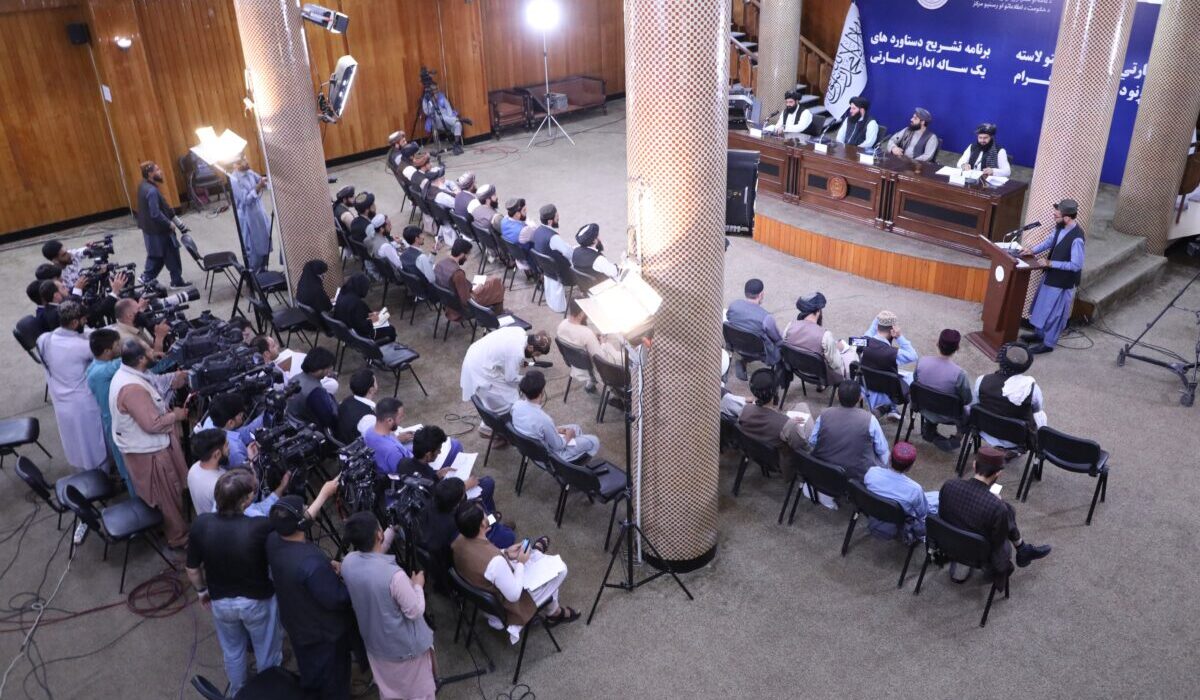
Taliban have effectively dismantled media freedom in Afghanistan since seizing power in August 2021, Human Rights Watch said in a report released Thursday, citing systematic surveillance, censorship, arbitrary detentions and torture of journalists, with women in the media bearing the brunt of the crackdown.
The 2025 report, based on dozens of interviews with journalists in Afghanistan and in exile, outlines a media landscape hollowed out by repression. Many outlets have shut down, thousands of journalists have fled, and those who remain face daily threats of arrest, violence or professional bans. Those in exile are now under threat of forced return to Taliban-controlled Afghanistan.
“Taliban officials increasingly compel Afghan journalists to produce ‘safe,’ pre-approved stories, and they punish those who step out of line with arbitrary detention and torture,” said Fereshta Abbasi, HRW’s Afghanistan researcher. “While all Afghan journalists have been affected, women journalists have been among the hardest hit.”
Systematic repression, widespread fear
The report documents a pattern of abuse led by Taliban intelligence and the Ministry for the Promotion of Virtue and Prevention of Vice (PVPV). Journalists who criticized the government, reported on human rights, or were suspected of contacts with exiled media were routinely detained and tortured. One detained journalist said Taliban agents told him: “We can kill you, and no one can even ask us why.”
Media offices are frequently raided by officials enforcing vague morality laws and Taliban-issued rules for journalists. These include bans on content “contrary to Islam,” on women’s voices, music broadcasts, and images of living beings. Reporters must ensure “balanced” and “truthful” content — terms left deliberately undefined, enabling arbitrary enforcement.
Failure to cover official events can lead to blacklisting. One Kabul journalist said he was detained twice simply for not attending a state event. Others said they were banned from reporting entirely after skipping police graduations or development ceremonies.
In one case, journalists were detained and accused of espionage after local authorities found foreign media reports critical of the Taliban. The detainees were tortured and forced to sign pledges to stop working. Many released journalists reported long-term mental health issues.
Ethnic, gender-based targeting
The repression is even harsher for minority and female journalists. Hazara journalists — already targets during the war — face increased discrimination and violent abuse. One Hazara reporter recounted being told during detention: “You are nothing to us. We can kill you whenever we want.”
Women journalists face near-total exclusion outside Kabul. Even where they are allowed to work, they face intense monitoring, cannot interview officials, and must often work from home. In some provinces, their voices are banned from broadcasts. The Ministry for Virtue and Vice routinely inspects newsrooms for violations of gender segregation, hijab requirements, and office interactions between men and women.
One woman was barred from entering a health department event: “They told me women aren’t allowed. That was the last time I tried to produce a report,” she said.
Even in interviews, women are often afraid to speak. One journalist noted that female doctors declined interviews out of fear of detention by morality police.
Arbitrary, inconsistent restrictions
HRW noted that enforcement of Taliban rules varies widely between provinces and often depends on the personal preferences of officials. In Kandahar — home to Taliban supreme leader Hibatullah Akhundzada — restrictions are especially severe.
Inconsistent guidelines have left journalists confused. Some authorities allow photos; others ban them entirely. In many cases, reporters are only permitted to use official state-issued footage, often sent through WhatsApp groups. Media in minority languages like Uzbek have largely disappeared, and programs on Shia teachings are banned.
In one province, a journalist was punished for reporting on cricket without prior permission. In another, journalists were detained for citing the UN Secretary-General. “You should only report from your own province,” they were told.
Censorship of critical reporting
Reporting on Taliban infighting, education bans, or public dissatisfaction is prohibited. Journalists said they received official letters warning them not to ask questions about controversial policies, such as the ongoing ban on girls’ education.
Several reporters were prosecuted for “propaganda” or “contact with foreign media.” Some were tortured during detention — including one journalist who was suffocated with plastic, beaten for hours, and accused of being an “American child.” Others were forced to sign pledges renouncing journalism.
One journalist was detained for posting a video of Taliban security forces destroying a statue. He was severely beaten, and his father was only allowed to visit him four months later.
Journalists reported enforced disappearances, where their families were kept uninformed for days or weeks. Many were denied legal counsel and held without trial.
Afghan media in exile: Threatened and unprotected
HRW also highlighted the precarious conditions of Afghan journalists in exile. More than 1,000 media workers fled after the Taliban takeover. Many now live in Türkiye or Pakistan, facing visa denials, police harassment and threats of deportation.
In Türkiye, Afghan journalists struggle to obtain international protection or work permits. Some say Taliban-linked consular staff have confronted or warned them. “When I went to renew my passport, they accused me of biased reporting,” said one female journalist.
In Pakistan, the government has stopped issuing or renewing visas for Afghans, and over 150 journalists now face the risk of being forcibly returned. In the U.S., many journalists evacuated with Temporary Protected Status (TPS) are at risk as protections expire.
One journalist in the U.S. said a major media outlet refused to support his asylum claim, fearing retaliation under the current administration.
HRW has called on the Taliban to immediately end arbitrary detentions, torture, and restrictions on media freedom. The group also urged foreign governments to halt deportations to Afghanistan, uphold non-refoulement obligations, and provide resettlement and support for Afghan journalists — especially women.
“The Taliban’s oppression of the media has increased as the need for independent news outlets in Afghanistan becomes ever greater,” Abbasi said. “Governments that pledged to support Afghan journalists must act now — before it’s too late.”