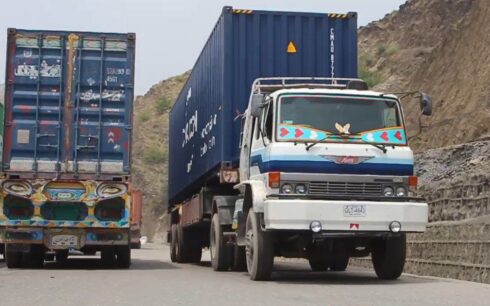
Border crossings between Afghanistan and Pakistan remained closed for a third consecutive day following deadly clashes between Taliban forces and Pakistani troops, disrupting trade and transit across key commercial routes.
Despite this, Pakistan deported at least 3,000 Afghan migrants on Monday, Oct. 13, through Spin Boldak and Torkham border crossings, according to Taliban’s refugees commission.
Economic analysts warn that the prolonged closure could lead to higher prices for goods, decreased exports and further pressure on Afghanistan’s currency, due to the country’s heavy dependence on trade with Pakistan.
“Pakistan is one of four countries accounting for 75 percent of our foreign trade, and the largest among them,” said economic analyst Sayed Masood. “It is a traditional market for Afghanistan, with joint investments between traders and investors from both countries.”
Currently, five major crossings — Torkham, Spin Boldak, Dand Patan, Ghulam Khan and Angoor Adda — are closed for trade and transit, according to reports.
Pakistan is Afghanistan’s second-largest trading partner. According to earlier data, bilateral trade between the two countries exceeded $1 billion in the first half of 2025. In a report issued last month, the Taliban’s National Statistics and Information Authority said Afghanistan exported goods worth $92.4 million to Pakistan in August and imported $125.5 million in return.
Pakistan ranks as the second-largest destination for Afghan exports, after India, and is one of the country’s main sources of imports.
“The closure of border crossings, with a shared border of around 2,640 kilometers, has disrupted Afghanistan’s primary trade routes,” said economic analyst Sir Quraishi. “It’s causing shortages, price hikes, and increased pressure on exports and the national currency.”
The deputy head of the Pakistan-Afghanistan Joint Chamber of Commerce told Reuters that freight trucks and containers have been halted on both sides of the border, resulting in significant financial losses for traders.
“This incident shows again that Afghanistan needs to reduce its trade dependence on Pakistan and strengthen alternative routes, such as Chabahar and Central Asia,” said another economic analyst, Bahram Ramesh.
Despite the closures, local sources at the Spin Boldak border said the crossing was temporarily opened on Monday to allow returning Afghan migrants to pass.
Truck drivers have also reported growing difficulties in moving goods, citing severe delays and mounting transportation challenges.