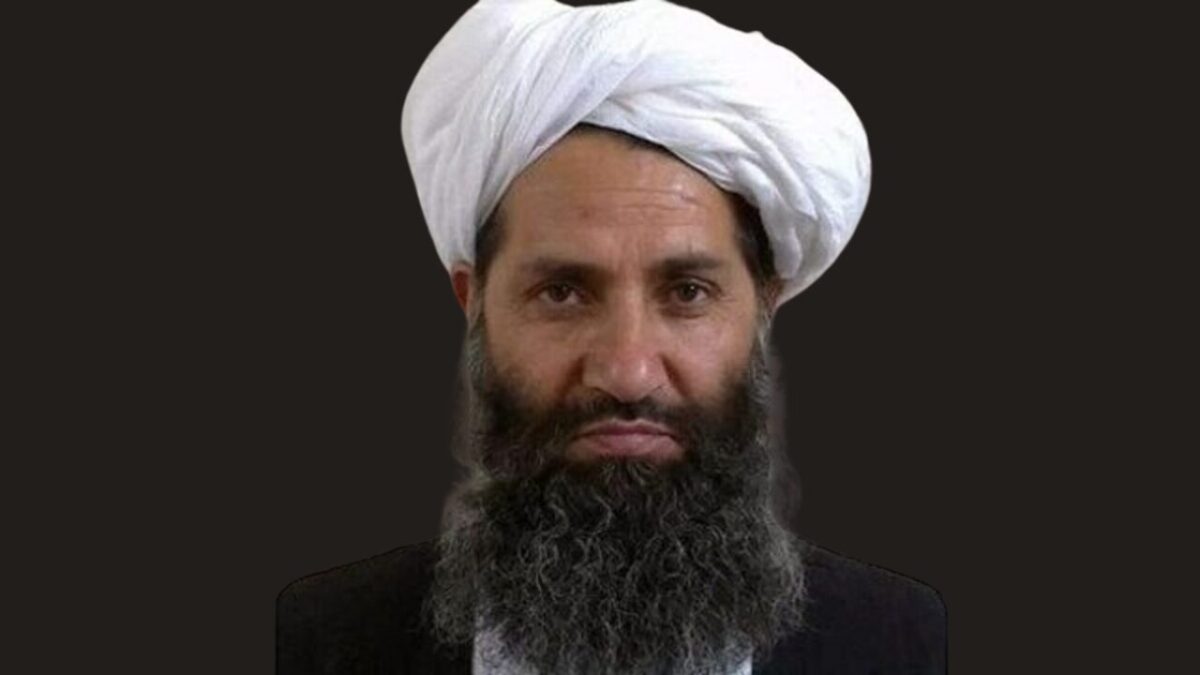
Taliban supreme leader Hibatullah Akhundzada has said that people have become unfamiliar with Sharia law, blaming previous governments for promoting what he called “un-Islamic practices” that, he claimed, distanced the population from religious teachings.
“In the past systems, un-Islamic matters were promoted, and people were alienated from religion,” Akhundzada said, according to a statement released by the Taliban’s deputy spokesperson. “They spread corruption and immorality, distorted the minds and thinking of the people, and attempted to drive them toward opposing religion and sect.”
Akhundzada further claimed that previous regimes made significant financial investments to undermine Islamic values.
“They invested heavily toward this goal,” he said. “The people’s thoughts and beliefs were so misled that now, Sharia appears unfamiliar to them.”
This statement comes just days after the Taliban leader claimed in another meeting that people’s religious devotion has changed.
His remarks came just days after another public address in which he expressed concern over what he described as a shift in religious commitment among Afghans.
In his Kandahar speech, Akhundzada also issued a warning about internal corruption, both within the Taliban administration and the religious establishment.
“There are two groups: one is the group of scholars, and the other is the group of rulers,” he said. “The people follow these two groups. If God reforms these two, the people will also be reformed. But if — God forbid — these two groups fall into corruption, the people will be led into corruption as well.”
His remarks come as many senior Taliban officials have been arrested recently over moral corruption.
Taliban said that several high-ranking figures attended the gathering in Kandahar, including the Taliban provincial governor, his deputy, the chief of the Taliban’s Southwest Religious Tribunal, the head of the Taliban’s central Dar al-Ifta, the director of jihadist religious schools, the head of the department for religious publications, the morality enforcement chief, and the director of Hajj and religious endowments for the province.
Akhundzada rarely appears in public but maintains significant influence over the Taliban’s ideological direction and governance model, especially from Kandahar, considered the Taliban’s spiritual stronghold. No image has been posted from him so far.
Since retaking power in 2021, the Taliban have imposed sweeping bans on female education and employment. Girls have been barred from secondary schools and universities, prohibited from taking university entrance exams, and blocked from attending medical and other professional training programs. Women are also largely restricted from working with nongovernmental organizations and in most public sectors.