Iran’s Supreme Leader Ayatollah Ali Khamenei warned on Sunday that any military attack by the United States would spark a “regional war,” as tensions escalated following US President Donald Trump’s threats to strike Iran and the European Union’s decision to designate Iran’s Revolutionary Guard as a terrorist organisation.
“The Americans should know that if they start a war, this time it will be a regional war,” Iranian state television quoted Khamenei as saying. “We are not the instigators and we do not seek to attack any country, but the Iranian nation will deliver a firm blow to anyone who attacks or harasses it.”
The remarks mark Khamenei’s strongest warning so far amid rising military pressure on Tehran. The United States has deployed the aircraft carrier USS Abraham Lincoln and accompanying warships to the Arabian Sea, a move Trump said was intended to deter Iran following its violent crackdown on nationwide protests.
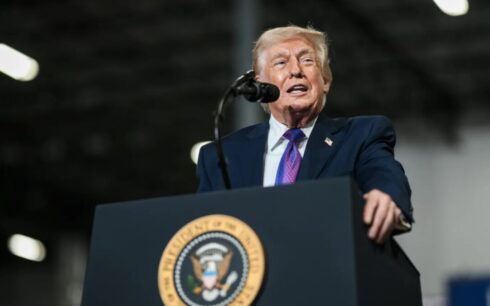
Washington has said it is weighing its options, though Trump has repeatedly said he hopes to avoid war and prefers a negotiated outcome. He has warned, however, that time is running out for Tehran to agree to a deal addressing its nuclear programme and the use of force against protesters.
Iran plans to hold live-fire military drills on Sunday and Monday in the Strait of Hormuz, the narrow waterway through which about 20% of the world’s traded oil passes. The US military’s Central Command has warned Iran against threatening American forces or disrupting commercial shipping during the exercises.
Separately, Iran’s parliamentary speaker, Mohammad Bagher Ghalibaf, said Tehran now considers all European Union militaries to be terrorist organisations, responding to the EU’s decision on Thursday to blacklist Iran’s Islamic Revolutionary Guard Corps (IRGC) over its role in suppressing protests.
“By targeting the IRGC, which has been the greatest barrier to the spread of terrorism to Europe, Europeans have acted against their own interests and shown blind obedience to the United States,” Ghalibaf said during a parliamentary session in which lawmakers wore Guard uniforms in a show of support.
The IRGC, which answers directly to Khamenei, wields significant influence in Iran, controlling the country’s ballistic missile programme and holding major economic interests.
The EU said its decision followed Iran’s deadly crackdown on demonstrations sparked by economic hardship and political grievances. Activists say thousands have been killed since protests erupted, a figure Iran disputes.
Trump has set two main red lines for possible military action: the mass killing of peaceful protesters and the potential execution of detainees. He has also renewed pressure over Iran’s nuclear programme, which the United States bombed during a brief conflict with Iran last June, according to US officials.
Speaking to reporters on Saturday, Trump said Iran was “seriously talking” to the United States and suggested military action could still be avoided, though he declined to say whether a decision had been made.
“There are people who think they’ll be emboldened if we don’t strike. Some people think that. Some people don’t,” Trump said.
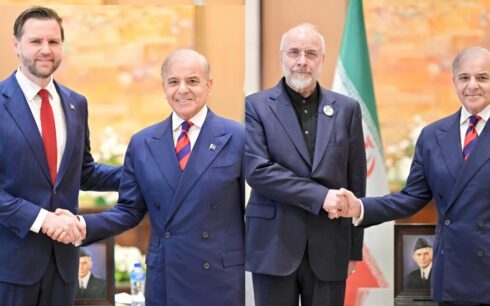
Iranian officials have signalled indirect diplomatic activity but insist there are no direct talks with Washington. Khamenei has repeatedly ruled out negotiations with the United States, though senior Iranian security official Ali Larijani said on Saturday that “structural arrangements for negotiations are progressing.”
The standoff has raised fears of a wider conflict in the Middle East, particularly if tensions spill over into the Gulf region or disrupt energy supplies.