China’s special envoy for Afghanistan said on Wednesday that the Taliban and Pakistan were prepared to deepen cooperation on regional peace and security following recent talks mediated by Beijing.
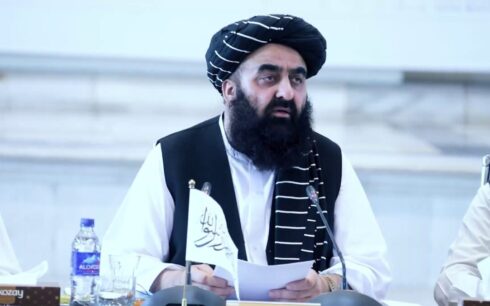
Yu Xiaoyong said he had held meetings this week with senior Taliban officials, including Amir Khan Muttaqi, the Taliban foreign minister, regarding the Urumqi dialogue process between the Taliban and Pakistan.
“Both sides gave a positive assessment of the Urumqi process and are ready to work together for peace, security and shared development,” Yu wrote on X.
Earlier, the Taliban’s Foreign Ministry said Muttaqi and the Chinese envoy had discussed bilateral relations, regional security and progress in the Urumqi talks during a meeting in Kabul.
According to the ministry, the Chinese envoy emphasized that the next stage of the process should focus on producing “practical results” through greater engagement, confidence-building and mutual understanding between the Taliban and Pakistan.
The Urumqi talks, hosted by China in April in the northwestern Chinese city of Urumqi, brought together Taliban and Pakistani representatives for a week of discussions focused on border tensions and security concerns.
The negotiations came amid increasingly strained relations between the Taliban and Pakistan, with Islamabad repeatedly accusing Afghan-based militant groups, including the Tehrik-i-Taliban Pakistan, of carrying out attacks inside Pakistan — claims the Taliban have denied.
A recent United Nations report highlighted the growing human cost of the tensions.
According to the report, at least 372 civilians were killed and 397 wounded between Jan. 1 and March 31 during clashes and cross-border violence involving Taliban and Pakistani forces. The United Nations said the casualties included women and children, with 269 people killed in a Pakistani strike on the Omid rehab center.
The UN also documented 95 security-related incidents during the three-month period linked to tensions between the Taliban and Pakistan.
Pakistan has intensified security operations along the border in recent months, while Taliban have accused Islamabad of carrying out airstrikes and cross-border attacks that have killed civilians.
Despite the tensions, China has increasingly positioned itself as a mediator between the two sides, reflecting Beijing’s broader interest in regional stability, trade connectivity and security in neighboring Xinjiang province.
Chinese officials have maintained close engagement with both Islamabad and the Taliban since the Taliban returned to power in Afghanistan in 2021.