Nearly 66,000 people have been displaced in eastern and southeastern Afghanistan as fighting between Pakistan and the Taliban intensifies, the UN said, warning that the violence has also damaged humanitarian facilities and disrupted aid deliveries.
According to the United Nations, Pakistani airstrikes have damaged several humanitarian sites, including a 20-bed emergency hospital at the Torkham border crossing, a transit center run by the International Organization for Migration and a reception facility for returning migrants.
UN findings also confirm that residential homes and public buildings have been struck during the fighting.
“In Afghanistan, nearly 66,000 people are reported to have been displaced across five eastern and southeastern provinces,” Stephane Dujarric, spokesman for the UN secretary general, said at a news briefing. “Residential areas have been hit, and among those killed and injured are children. Due to access constraints, details are still being verified.”
Residents in some of the hardest-hit areas say the attacks have devastated entire families.
In Barmal District of Paktika province, a house collapsed after what residents described as a Pakistani airstrike. Local residents said at least 14 people were killed in the attack.
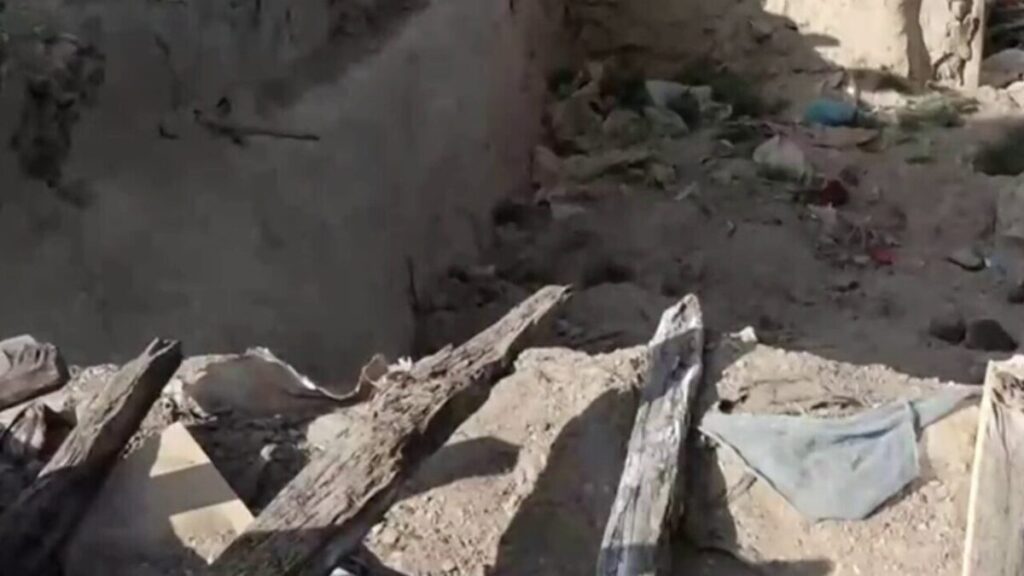
“We have received no help,” said Sharifullah, a relative of the victims. “Our situation is very difficult.”
Another resident, Mohammad Qasim, said families had been left with little support. “We have nothing,” he said. “We are spending the nights like this.”
The United Nations Assistance Mission in Afghanistan has previously confirmed that at least 42 civilians have been killed and more than 100 others wounded in the recent fighting, though Taliban officials say the toll is significantly higher.
The violence is also complicating humanitarian operations in a country already facing one of the world’s worst humanitarian crises. The United Nations said the clashes have forced the World Food Program to suspend some activities in affected areas, disrupting food assistance for roughly 160,000 people.