A Taliban minister said on Tuesday that male doctors are considered “mahram,” or permissible guardians, when treating female patients, allowing them to examine parts of a woman’s body that would otherwise be forbidden to unrelated men.
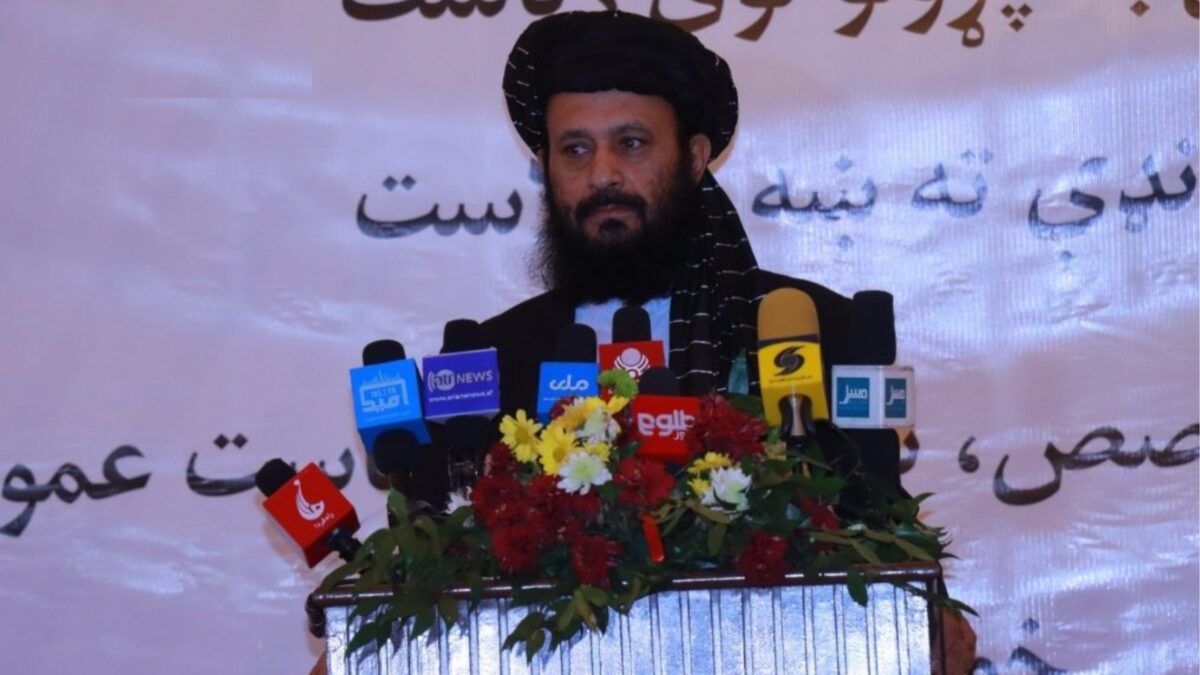
The comments were made by Hamdullah Nomani, the Taliban’s communications minister, during a gathering with doctors in Kabul.
Addressing medical professionals, he said they had been granted special religious authority in clinical settings.
“I, as a minister, am not allowed in this city to look at a woman’s face,” Nomani said. “But you are given the authority that when a woman is on your operating table, all her features are before you, and to that extent you are permitted even to remove her clothing.”
He added: “Now that you have this authority, you should keep protect it, and use it safely… All clerics are of the same view that doctors can see the areas where others are not permitted.”
His remarks come as the Taliban continue to prohibit women from attending secondary school and university, including medical training programs. International organizations have warned that barring women from medical education could deepen strains on Afghanistan’s already fragile health system.
Even before the Taliban returned to power, Afghanistan faced shortages of female doctors and health workers, particularly in rural areas where cultural norms often require women to be treated by female practitioners.
At the same event, Noor Jalal Jalali, the Taliban’s public health minister, said that “commerce must be separated from medicine,” without elaborating on how that principle would be enforced.
The ceremony marked the graduation of about 500 health specialists. Jalali said that of 318 district-level hospitals planned nationwide, procurement processes for 100 had been completed and construction would begin soon.
The statements come at a time when health services are under additional strain. Following the closure of key border and trade crossings with Pakistan, the cost of medical treatment and pharmaceuticals has risen sharply, according to residents and health workers.
Aid organizations have previously cautioned that restrictions on women’s education and employment risk undermining access to care, particularly for women and children in a country already grappling with economic crisis and limited health infrastructure.