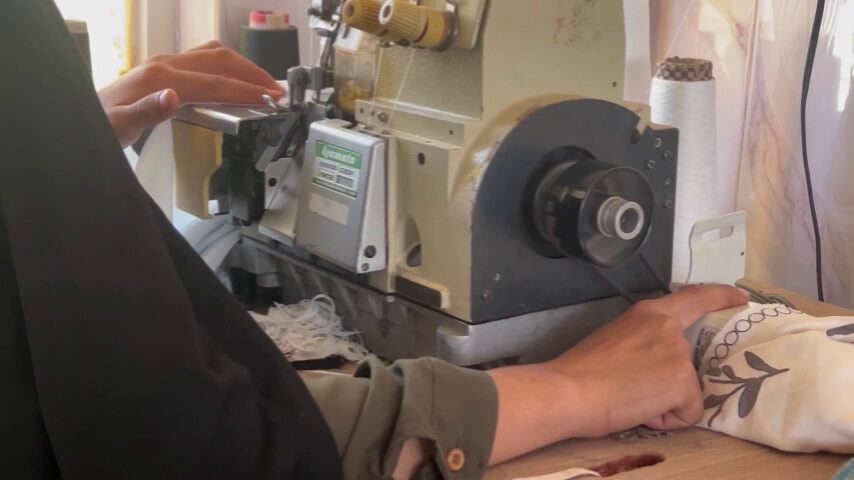
In a modest sewing workshop tucked away in the mountains of central Afghanistan, more than two dozen teenage girls spend their days hunched over thread and fabric — stitching not only dresses, but what remains of their futures.
Barred from returning to school under Taliban rule, these girls say they never imagined their lives would be reduced to needlework. “I never wanted to become a tailor,” said Sajeda, a former 10th-grade student from Bamiyan. “I came here out of necessity. I hope one day the schools reopen, and we can resume our education.”
Since the Taliban regained control of Afghanistan in August 2021, girls beyond sixth grade have been banned from attending school — a policy that has drawn global condemnation and left millions of Afghan girls with shattered dreams and uncertain futures.
For girls like Sajeda, tailoring offers a rare alternative to complete isolation at home. The workshop, which produces traditional and modern women’s clothing, provides both income and a fragile sense of community. Yet it is no substitute for the classroom.
“I was in 7th grade when the Taliban came to power,” said Ranaa, another worker at the shop. “It’s been nearly four years since I’ve been to school. We ask the authorities to reopen schools so we can return to our studies.”
In the workshop, half of the girls sew dresses — including formal gowns — while others sell finished products at local markets. Bahara, another young woman in the workshop, said she never wanted to work as a vendor, but like many, she felt she had no other choice.
“This was never my dream,” Bahara said. “But now, I’ve had to accept it out of sheer necessity. I only wish schools would reopen.”
According to aid agencies and education advocates, millions of Afghan girls have been denied access to formal education since the Taliban’s return. While some families have sought out underground schools or online options, many have been left behind — confined to their homes or pushed into labor.
Despite growing pressure from the international community and protests from Afghan women and girls themselves, the Taliban have stood firm on their ban, framing it as consistent with their interpretation of Islamic values — a claim widely rejected by Muslim-majority countries and scholars.
For the girls of Bamiyan, the hum of sewing machines is now the background music of lost opportunity. But hope, however faint, still lingers.
“We haven’t given up,” said Sajeda. “We’re still waiting for the day we can return to class.”